




- Introduction: Why Mind–Body Integration Matters
- The Foundation of Holistic Wellness
- Your Daily Mind–Body Wellness Routine at Home (AM & PM)
- Mindfulness & Stress Management
- Movement for Mind & Body
- Nutrition & Nourishment
- Recovery, Rest & Sleep
- Integrating Holistic Practices Into Busy Life
- Thai & Herbal Wellness Traditions (Culturally Respectful Practices)
- Putting It All Together: A 7-Day Starter Plan
- Common Pitfalls (and Simple Fixes)
- Conclusion: Start Small, Stay Kind, Build Momentum
- FAQs
Introduction: Why Mind–Body Integration Matters
If you’ve ever felt “busy yet not well,” holistic wellness practices for mind and body offer a grounded way forward. Instead of isolating fitness from mental health or sleep from nutrition, holistic wellness invites us to see the system: your thoughts, emotions, movement, food, rest, environment, and relationships all interact. When you treat wellness as an ecosystem, small, consistent changes compound into noticeable calm, clearer focus, and steadier energy.

In this guide, we’ll craft a daily mind–body wellness routine at home and explore practical habits: mindful breathing, gentle movement, anti-inflammatory meals, sleep hygiene, and stress recovery rituals. You’ll learn how to adapt these tools to your schedule, how to habit stack for sustainability, and how to personalize practices so they feel culturally respectful and meaningful. Most importantly, you’ll leave with a simple, flexible plan—rooted in holistic wellness practices for mind and body—that you can begin today.
👉 “For deeper insights into emotional balance, read our full guide on self-care for mental health.”
The Foundation of Holistic Wellness
At its heart, holistic wellness practices for mind and body rest on the mind–body connection: the way thoughts can change muscle tension, breath, hormones, and perception, and the way movement can shift mood, focus, and resilience. This is why pairing meditation with mobility, or breathwork with stretching, often feels more effective than doing either alone.
A useful framing is to think in systems:
- Inputs: sleep, food, breath, movement, light exposure, social contact.
- Processes: nervous system regulation, recovery, digestion, attention.
- Outputs: stable energy, balanced mood, posture, focus, immunity.
When you improve inputs consistently, processes stabilize and outputs improve. That’s the promise of holistic wellness practices for mind and body: rather than chasing hacks, you build routines that serve you every day.
Your Daily Mind–Body Wellness Routine at Home (AM & PM)
The phrase daily mind–body wellness routine at home sometimes sounds intimidating, but think “micro-rituals.” Choose one 5-minute practice for morning, midday, and night. As you build consistency, stack more.
👉 “Looking for a simple starter plan? Check out our daily self-care routine for mental and physical wellness
Morning (10–20 minutes)
- Light + Hydration (2 min): Open a window or step onto a balcony. Drink water with a squeeze of citrus or a pinch of mineral salt.
- Breath Primer (3–4 min): Box breathing (inhale–hold–exhale–hold for 4 counts) or 5 slow nasal breaths with long exhales to cue calm.
- Gentle Mobility (5–10 min): Neck rolls, shoulder CARs, cat–cow, hip circles. If you prefer structure, a gentle yoga flow works beautifully.
- Intention/Journaling (1–2 min): One line: “Today I will protect my focus by ____.”

These tiny steps anchor holistic wellness practices for mind and body into your day before distractions begin.
Midday (5–10 minutes)
- Digital Detox Break (3–5 min): Stand up, put your phone face-down, look out a window at a distant point, and breathe.
- Somatic Reset (2–3 min): Shoulder blade squeezes, jaw release, slow neck rotations.
- Mindful Eating Cue (2 min): Before lunch, pause and take five belly breaths to signal “rest and digest.”
Evening (15–25 minutes)
- Wind-Down Mobility (5–10 min): Calf stretch, hamstring glide, thoracic rotations.
- Herbal Tea + Light Hygiene (5 min): Dim lights; sip lemongrass or ginger tea.
- Sleep Hygiene (5–10 min): Cool the room, set a consistent bedtime, and avoid screens 60 minutes before bed.
Repeat this daily mind–body wellness routine at home for two weeks. Track sleep quality, mood, and focus in a journal to see trends.
Mindfulness & Stress Management
When stress spikes, thinking your way out can be hard. Instead, start with the body and breath; they’re the steering wheel for attention.
A Mindfulness Routine for Beginners
- 1 minute of noticing: Close your eyes and label what you feel (pressure, warmth, tightness) without judgment.
- 2 minutes of breath awareness: Inhale through the nose; lengthen your exhale.
- 2 minutes of sound: Focus on far sounds, then near sounds.

This five-minute sequence is a cornerstone of holistic wellness practices for mind and body because it teaches your nervous system to shift from fight-or-flight to rest-and-repair.
Breathwork for Stress Relief
- Box breathing: 4–4–4–4 pattern to steady the mind.
- Extended exhale breathing: 4-second inhale, 6–8-second exhale to cue relaxation.
- Alternate nostril breathing: Balance and focus, ideal before work blocks.
Digital Detox Tips
Set no-phone zones: dining table, bedroom, first 30 minutes after waking. Batch notifications. Use grayscale mode in the evening. These cues protect your daily mind–body wellness routine at home and make mindfulness stick.
Movement for Mind & Body
Movement is a mood amplifier. The right kind at the right time can calm anxiety, brighten focus, and improve sleep.
Gentle Yoga for Anxiety
A short flow—child’s pose, cat–cow, thread-the-needle, low lunge, supported forward fold—releases the back line, opens hips, and lengthens the exhale. Pair with slow nasal breathing to deepen the “rest and digest” response that supports holistic wellness practices for mind and body.
Tai Chi or Qigong for Balance & Calm
Slow, rhythmic shifts of weight and coordinated breath build stability and presence. Ten minutes works as a moving meditation when seated practice feels inaccessible.
Pilates for Posture & Core
Low-impact and precise. Sequencing like pelvic tilts, dead bugs, and side-lying series restores alignment for desk-bound bodies and enhances the mind–body connection.
Somatic Movement Basics
Think “sense and soften.” Micro-movements that release habitual tension in the jaw, shoulders, diaphragm, and hips can reset your baseline. A few minutes sprinkled through the day sustain holistic wellness practices for mind and body without needing a gym.
Nutrition & Nourishment
Food is both fuel and a conversation with your biology. Simple choices go a long way.
Anti-Inflammatory Meals
Build plates around colorful vegetables, quality protein (fish, tofu, legumes), healthy fats (olive oil, avocado), and slow carbs (brown rice, sweet potatoes). Add herbs and spices—turmeric, ginger, holy basil—for flavor and recovery.
Mindful Eating Practices
Pause before eating. Notice colors and aroma. Take your first three bites slowly. Put utensils down between bites. These cues help satiety hormones do their job and weave mindful eating into holistic wellness practices for mind and body.
Hydration Rituals & Herbal Teas
Start the day with water; keep a bottle at arm’s reach. In the evening, calming teas—lemongrass, ginger, or chamomile—pair nicely with your wind-down routine.
Adaptogens (Informational)

If you’re curious, research adaptogens like ashwagandha or tulsi with a healthcare professional. They’re not quick fixes but may complement sleep and stress work when used judiciously.
Recovery, Rest & Sleep
You don’t get stronger during the workout—you get stronger during recovery.
Sleep Hygiene Checklist
- Consistent bedtime/wake time (even weekends).
- Cool, dark, quiet bedroom.
- Dim lights 60 minutes before bed; avoid late heavy meals.
- Reserve bed for sleep and intimacy; not scrolling.
Evening Relaxation Routine
- Downshift signal: brew herbal tea, dim lights, tidy a small space.
- Physical exhale: supported child’s pose or legs-up-the-wall (3–5 minutes).
- Mind quieting: write down tomorrow’s top three tasks; close the notebook.
These habits anchor holistic wellness practices for mind and body into the part of the day most people neglect: rest.
Integrating Holistic Practices Into Busy Life
You don’t need an hour—just anchors.
Habit Stacking & Micro-Moments
- After brushing teeth → 3 deep breaths.
- After emailing a report → 10 wall push-ups.
- After dinner → 5-minute walk outside.
- Before bed → 2-minute journal.
Weekly Self-Care Checklist
- One mobility session (20–30 min).
- One social connection you enjoy.
- One nature break (even a balcony plant check-in counts).
- One personal ritual (massage ball, face steam, or aromatherapy).
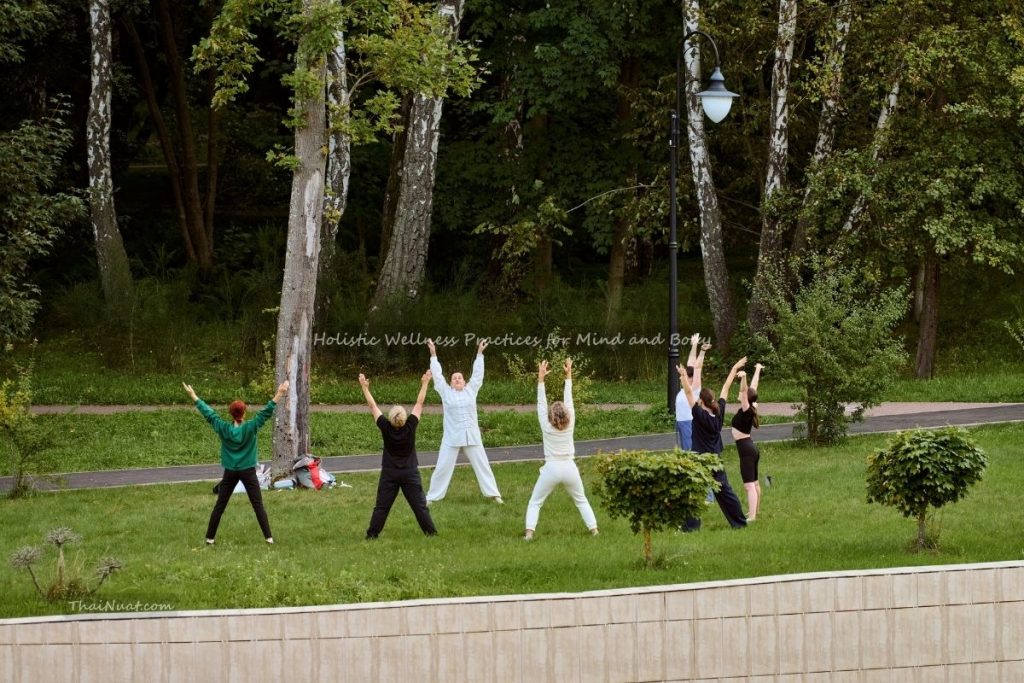
By distributing small actions across the week, your daily mind–body wellness routine at home becomes automatic and resilient.
Thai & Herbal Wellness Traditions (Culturally Respectful Practices)
Thailand’s wellness heritage emphasizes balance, circulation, and the therapeutic power of plants—principles that complement holistic wellness practices for mind and body.
Herbal Teas & Aromatics
- Lemongrass tea: bright, citrusy; many enjoy it as a calming evening ritual.
- Ginger tea: warming; pairs well with a quiet reading session.
- Kaffir lime peel steam: a traditional aromatic many people use at home for a refreshing lift.
Herbal Compress & Self-Massage
A warm herbal compress (often filled with lemongrass, kaffir lime, turmeric, and camphor) can be adapted at home with care: apply gentle warmth (not hot) to tight areas for a few minutes, then sweep strokes down the limbs. Pair with slow breathing for a soothing self-care ritual.
Spa-Inspired Evenings
Dim lights, play soft instrumental music, and create a 20-minute home spa: warm foot soak with Epsom salt, gentle calf massage, and a cup of tea. These accessible practices support holistic wellness practices for mind and body without special equipment.
👉 “Looking to bring natural healing into your daily life? Don’t miss our guide on DIY Herbal Remedies at Home: Easy Recipes for Health & Beauty.”
Putting It All Together: A 7-Day Starter Plan
This simple template blends movement, mindfulness, nourishment, and rest. Swap days as needed.
- Day 1 (Calm): 10-min gentle yoga + box breathing; mindful dinner.
- Day 2 (Posture): 10-min Pilates core; digital detox walk after lunch.
- Day 3 (Balance): 10-min tai chi + evening herbal tea.
- Day 4 (Unwind): Somatic release (jaw/shoulders) + legs-up-the-wall.
- Day 5 (Focus): Breath focus (extended exhale) + mindful lunch (no screens).
- Day 6 (Restore): Mobility flow + early lights-down and sleep hygiene routine.
- Day 7 (Integrate): Nature time + journaling “what worked” for 10 minutes.
By the week’s end, you’ll have lived your daily mind–body wellness routine at home and felt which parts resonate. Keep those; iterate the rest.
Common Pitfalls (and Simple Fixes)
- All-or-nothing thinking: Start with 5 minutes; consistency beats intensity.
- Screen creep: Move chargers away from the bed; set app limits.
- Unclear goals: Choose one focus per week (sleep, posture, or calm).
- Rigid plans: Keep backups (a 3-minute version of every practice) to preserve holistic wellness practices for mind and body during hectic days.
Conclusion: Start Small, Stay Kind, Build Momentum
Sustainable wellness isn’t a challenge—it’s a rhythm. When you combine breathwork, gentle movement, mindful meals, and sleep care, holistic wellness practices for mind and body become the natural default, not another task. Design your daily mind–body wellness routine at home with small anchors, protect it with boundaries (light, screens, bedtime), and refine it with weekly check-ins. Your future self will thank you for the calm, clarity, and steady energy you build—one micro-ritual at a time.
FAQs
1) What are the easiest holistic wellness practices for mind and body to start with?
Begin with three micro-habits: morning hydration + light, a 3-minute breath reset after lunch, and a 10-minute wind-down at night. These anchor holistic wellness practices for mind and body into your day and create momentum for movement and better sleep.
2) Can I follow a daily mind–body wellness routine at home if I’m very busy?
Yes—use 5-minute blocks. Pair habits with things you already do (coffee → breathwork; email → shoulder rolls; brushing teeth → journal). A daily mind–body wellness routine at home succeeds when it’s friction-light and repeatable.
3) Is yoga or meditation better for beginners?
It depends on your temperament. If sitting feels restless, try gentle yoga or tai chi first—movement can be a gateway to meditation. Over time, combine both to strengthen holistic wellness practices for mind and body.
4) Which herbal teas support relaxation in the evening?
Many people enjoy lemongrass, ginger, or chamomile during wind-down. Pair tea with dim lighting and soft music to reinforce your daily mind–body wellness routine at home.
5) How do I keep motivation when life gets hectic?
Shrink the target. Keep “backup” 2–3 minute versions of every practice. Track one win per day in a tiny journal. These strategies protect holistic wellness practices for mind and body through busy seasons.