


- Introduction
- Keep The Routine Simple
- Choose A Regular Starting Time
- Create A Clear End To Work
- Reduce Bright Light Gradually
- Make The Space Comfortable
- Begin With A Warm Shower
- Try A Warm Bath When Available
- Use A Simple Herbal Bath Carefully
- Add A Warm Foot Soak
- Adding Herbs To A Foot Soak
- Dry And Care For The Feet
- Use Gentle Foot Self-Massage
- Relax The Hands
- Release Shoulder Tension Gently
- Use Gentle Neck Movements
- Add A Short Stretching Sequence
- Keep Evening Movement Calm
- Practise Slow Breathing
- Make The Exhalation Slightly Longer
- Use A Short Body Scan
- Relax The Jaw And Face
- Use Aroma As An Optional Support
- Use Essential Oils Safely
- Choose A Mild Herbal Drink
- Keep The Drink Light
- Reduce Evening Screen Stimulation
- Create A Phone Parking Place
- Choose Quiet Sound
- Prepare The Bedroom
- Adjust The Room Temperature
- Write Down Tomorrow’s Priorities
- Use A Simple Gratitude Or Reflection Habit
- Try Gentle Self-Massage With Moisturiser
- Use A Warm Herbal Compress Carefully
- Where To Apply Gentle Warmth
- Keep The Routine Realistic For Parents
- Create A Family Wind-Down Period
- A Fifteen-Minute Thai-Inspired Routine
- A Thirty-Minute Thai-Inspired Routine
- A Weekend Evening Routine
- Adapt The Routine To Hot Weather
- Adapt The Routine During Rainy Weather
- Adapt The Routine When Travelling
- Know When To Skip Heat Or Massage
- Avoid Turning Relaxation Into Another Task
- Common Evening Relaxation Mistakes
- A Simple Evening Checklist
- Conclusion
- FAQ
- What Is A Thai-Inspired Evening Relaxation Routine?
- How Long Should The Routine Take?
- Do I Need Thai Herbal Products?
- What Is The Easiest Step To Begin With?
- Can I Use A Herbal Foot Soak Every Evening?
- Are Essential Oils Necessary?
- What Gentle Stretches Can I Do?
- Can Children Follow The Same Routine?
- What Should I Do If Heat Makes Me Dizzy?
- Can This Routine Treat Insomnia?
Introduction
Evenings can easily become an extension of the working day. Messages, household tasks, television, social media, late meals, and unfinished responsibilities may continue until bedtime, leaving little space for the body and mind to slow down.
A Thai-inspired evening relaxation routine creates a gentler transition between daily activity and rest. It does not need to involve an expensive spa treatment, a long list of herbal products, or a complicated wellness programme.
Simple practices inspired by Thai wellness traditions may include warmth, bathing, foot care, gentle pressure, slow movement, herbal aromas, quiet breathing, and attention to daily balance. These habits can be adapted to the home and adjusted according to personal comfort.
The purpose is not to promise perfect sleep or treat a health condition. The aim is to build a calm, repeatable routine that signals that the active part of the day is ending.
This guide explains how to create a practical Thai-inspired evening relaxation routine, including preparation, warm bathing, foot soaking, stretching, breathing, self-massage, herbal aromas, screen reduction, and bedtime planning.
👉 “Readers creating a calming evening routine may also explore these simple Thai herbal face mask ideas for gentle skincare and self-care inspiration.”
Keep The Routine Simple
A relaxation routine becomes difficult to maintain when it requires too much time, too many products, or a perfect environment.
A simple evening sequence might include:
- Lowering the lights
- Putting away work
- Taking a warm shower
- Soaking the feet
- Stretching gently
- Practising slow breathing
- Applying moisturiser
- Drinking water or a suitable warm drink
- Sitting quietly
- Preparing the bedroom
The whole routine may take fifteen minutes or an hour. Consistency is usually more useful than length.
When beginning a Thai-inspired evening relaxation routine, choose two or three habits that fit naturally into the evening.
Choose A Regular Starting Time
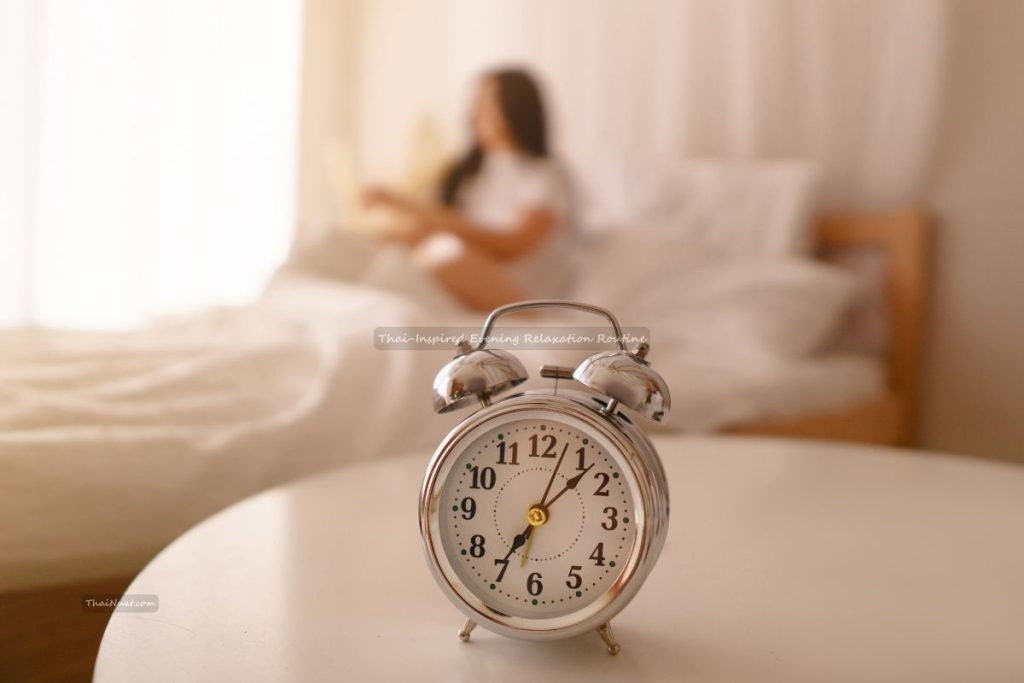
A predictable starting time can help separate daytime activity from evening rest.
The routine might begin:
- After dinner
- After household tasks
- When children are settled
- One hour before bed
- After the final work message
- After an evening shower
The exact time matters less than creating a recognisable transition.
Avoid waiting until you are already exhausted. A short routine started slightly earlier may feel calmer than trying to complete several activities immediately before sleep.
Create A Clear End To Work
Working from home or checking messages late in the evening can make it difficult to feel that the day has ended.
Try a simple closing habit:
- Write down unfinished tasks
- Close work applications
- Clear the desk
- Put documents away
- Silence non-essential notifications
- Decide when work will continue tomorrow
Writing down the next step can reduce the need to keep repeating it mentally.
This practical boundary can become the first part of a Thai-inspired evening relaxation routine.
Reduce Bright Light Gradually
Bright lighting can keep a room feeling active.
During the evening, consider:
- Turning off strong overhead lights
- Using a shaded lamp
- Reducing screen brightness
- Closing unnecessary applications
- Choosing warm and comfortable lighting
- Keeping the bedroom darker than working areas
The room does not need to become completely dark. The goal is to create a visible difference between daytime activity and evening rest.
Use stable electric lights rather than unattended candles when fire safety is a concern.
Make The Space Comfortable
A relaxation space can be very simple.
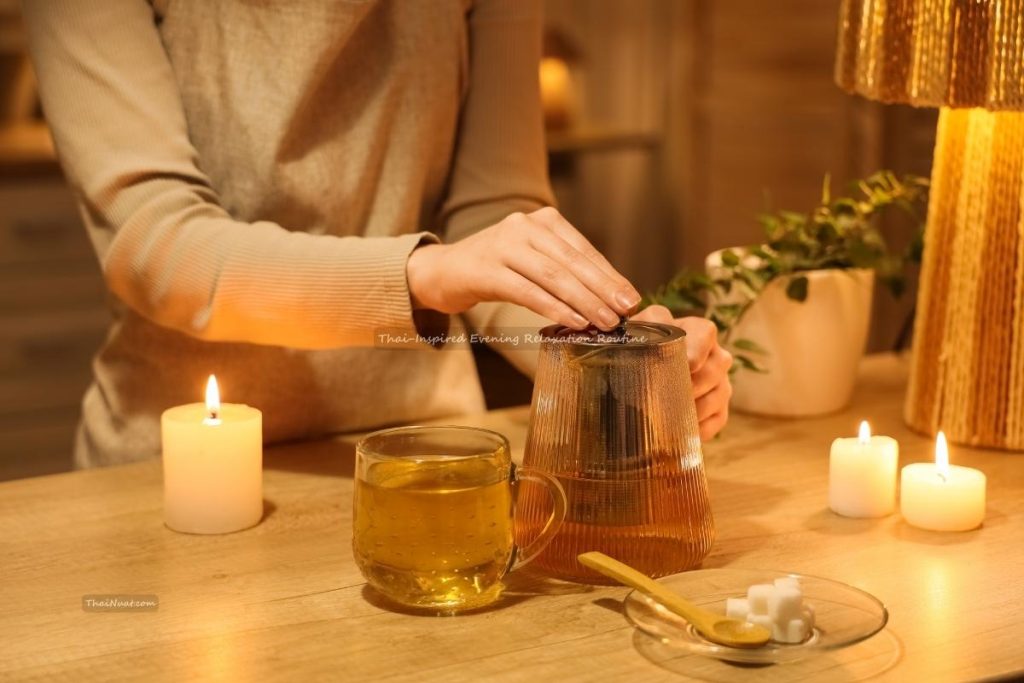
Prepare:
- A clean towel
- Comfortable clothing
- A stable chair
- A small cushion
- Drinking water
- A light blanket
- A basin for a foot soak
- Unscented moisturiser or suitable massage oil
Remove obvious distractions where practical.
The space should feel safe and comfortable rather than arranged only for appearance.
Begin With A Warm Shower
A warm shower can help create a clear transition into the evening.
Keep the water comfortably warm rather than excessively hot.
During the shower:
- Let the shoulders relax
- Avoid rushing
- Notice the warmth
- Wash away sweat and outdoor dust
- Breathe normally
- Finish before feeling overheated
A short shower can be enough. The value comes from using it intentionally as the beginning of rest.
In a Thai-inspired evening relaxation routine, warmth supports comfort without needing to become intense.
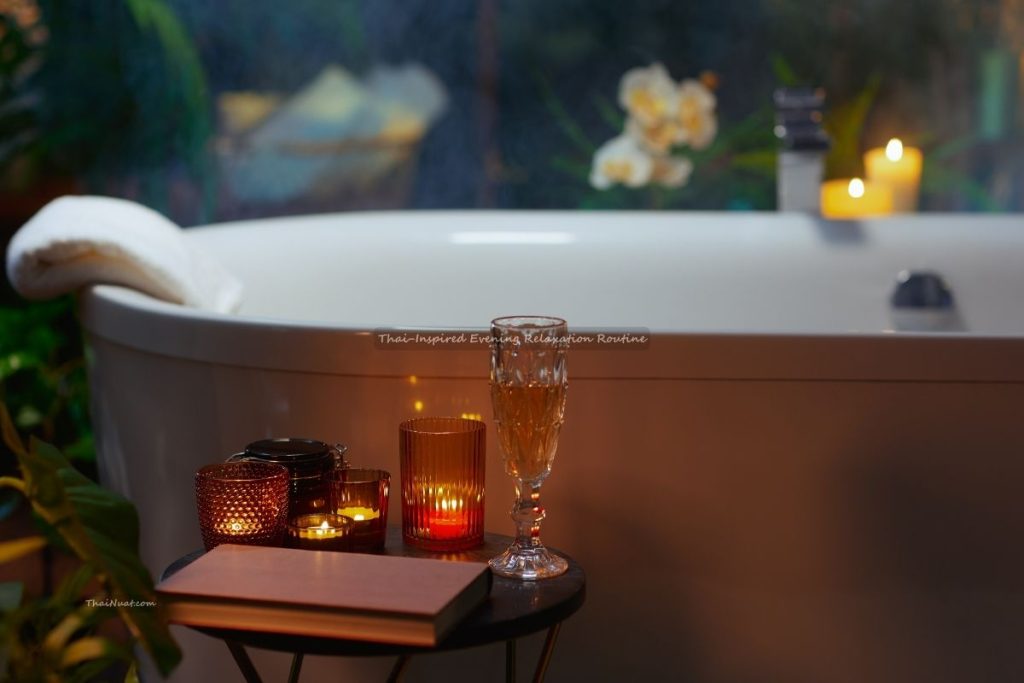
Try A Warm Bath When Available
A warm bath may provide a longer period of quiet.
Before beginning:
- Prepare a towel
- Keep water nearby
- Check that the floor is not slippery
- Choose a comfortable temperature
- Limit strong fragrances
- Keep electronic devices away from water
- Stand up slowly afterward
The bath should feel calming, not exhausting.
People who are sensitive to heat or have relevant health concerns should use appropriate caution and seek professional advice when needed.
Use A Simple Herbal Bath Carefully
Thai-inspired bathing products may include gentle herbal or aromatic ingredients.
Possible products may contain:
- Lemongrass
- Pandan
- Kaffir or makrut lime
- Ginger
- Turmeric
- Tamarind
- Floral aromas
- Herbal blends
Choose products with clear labels and instructions.
Check for:
- Skin allergens
- Strong essential oils
- Colour that may stain
- Ingredients unsuitable for sensitive skin
- Slippery oils
- Products not intended for bathing
A herbal scent can support the atmosphere, but it is not necessary for an effective Thai-inspired evening relaxation routine.
Add A Warm Foot Soak
A foot soak is one of the easiest Thai-inspired home wellness habits.
You need:
- A clean basin
- Comfortably warm water
- A stable chair
- A towel
- Ten to fifteen quiet minutes
Place the feet in the water and allow the lower legs to rest.
Avoid water that feels painfully hot. Check the temperature carefully, especially when sensation in the feet is reduced.
A plain warm-water soak is enough. Herbs, salts, or scented products are optional.
Adding Herbs To A Foot Soak
A prepared herbal foot-soak product may create a pleasant aroma.
When using one:
- Read the ingredient list
- Follow the recommended amount
- Check for allergies
- Avoid broken or irritated skin
- Stop if burning or itching develops
- Rinse when instructed
- Dry carefully between the toes
Fresh ingredients should be clean and used cautiously. Avoid adding unknown plants or concentrated essential oils directly to the water.
The safest Thai-inspired evening relaxation routine remains simple and easy to monitor.
Dry And Care For The Feet
After soaking:
- Dry the feet thoroughly
- Pay attention between the toes
- Check for irritation
- Apply a small amount of moisturiser
- Avoid making the floor slippery
- Put on clean socks when preferred
Do not apply heavy moisturiser between the toes unless advised, because retained moisture may be uncomfortable.
People with diabetes, circulation concerns, wounds, infections, or specialised foot-care needs should follow professional guidance.
Use Gentle Foot Self-Massage
A brief foot massage can follow the soak.
Try:
- Slow circles across the sole
- Gentle thumb pressure
- Light movements around the heel
- Careful toe movements
- Slow ankle circles
- Soft strokes toward the lower leg
Pressure should remain comfortable.
Stop when you notice:
- Sharp pain
- Numbness
- Tingling
- Swelling
- Skin irritation
- Unusual sensitivity
Self-massage should support relaxation rather than become an intense pressure treatment.
Relax The Hands
Hands may feel tired after typing, driving, cooking, cleaning, or holding a phone.
A simple hand routine can include:
- Applying moisturiser
- Rubbing the palms together
- Making slow circles in each palm
- Gently moving the fingers
- Rotating the wrists
- Relaxing the grip
Keep the movements unhurried.
This is a useful part of a Thai-inspired evening relaxation routine because it requires little space or preparation.
Release Shoulder Tension Gently
Many people hold tension in the shoulders without noticing it.
Try:
- Raising the shoulders gently
- Releasing them slowly
- Rolling them backward
- Letting the arms hang
- Moving the shoulder blades softly
- Resting the hands on the thighs
Repeat only a few times.
Avoid forceful movements or stretching through pain.
The aim is not to correct the body in one evening. It is to notice unnecessary tension and allow a small release.
Use Gentle Neck Movements
Neck movements should remain slow and controlled.
You may try:
- Looking gently to one side
- Returning to the centre
- Looking to the other side
- Lowering the chin slightly
- Returning to a comfortable position
Avoid forceful circles, pulling the head, or pushing into a painful range.
People with neck injuries, dizziness, numbness, severe headaches, or recent accidents should obtain appropriate medical guidance.
Add A Short Stretching Sequence
Gentle stretching can help separate the body from long periods of sitting or standing.
A simple sequence may include:
- Shoulder rolls
- Wrist circles
- Ankle circles
- Reaching the arms upward
- Gentle side stretches
- A mild calf stretch
- Relaxing the jaw
Move within a comfortable range.
Do not bounce, force a position, or copy advanced stretches from social media.
The stretching part of a Thai-inspired evening relaxation routine can take only three to five minutes.
Keep Evening Movement Calm
Intense exercise late in the evening may feel energising for some people.
When the goal is relaxation, choose slower movement such as:
- Gentle walking
- Light stretching
- Easy mobility exercises
- Slow yoga-inspired positions
- Controlled breathing with movement
- Quiet household movement
Personal responses vary. Some people sleep comfortably after evening exercise, while others prefer vigorous activity earlier.
Notice what works best for your routine.
Practise Slow Breathing
Slow breathing is a simple way to shift attention away from tasks and screens.
Try this gentle pattern:
- Sit comfortably
- Relax the jaw
- Lower the shoulders
- Breathe in through the nose
- Let the abdomen move naturally
- Breathe out slowly
- Pause without forcing
- Repeat several times
Do not take unusually large breaths.
The breathing should remain easy and quiet.
Make The Exhalation Slightly Longer
Some people find a slightly longer exhalation calming.
For example:
- Breathe in gently
- Breathe out a little more slowly
- Return to a natural rhythm
There is no need to count precisely.
Stop structured breathing if it causes dizziness, anxiety, discomfort, or breathlessness. Return to normal breathing.
A Thai-inspired evening relaxation routine should never feel like a performance test.
Use A Short Body Scan
A body scan means noticing different areas without trying to fix everything.
Move your attention through:
- Feet
- Lower legs
- Thighs
- Abdomen
- Hands
- Arms
- Shoulders
- Jaw
- Face
Notice whether each area feels warm, cool, heavy, light, tense, or relaxed.
Let the body rest as it is.
This can be done while sitting, lying down, or resting after a foot soak.
Relax The Jaw And Face
Tension may remain around the jaw, forehead, and eyes.
Try:
- Allowing the teeth to separate slightly
- Letting the tongue rest
- Softening the forehead
- Closing the eyes without squeezing
- Relaxing the muscles around the mouth
Avoid pressing hard on the jaw or face.
A warm towel placed gently over the face for a short time may also feel comforting, provided the temperature is safe and breathing remains unobstructed.
Use Aroma As An Optional Support
Herbal and floral aromas are often associated with Thai spas and wellness spaces.
Possible scents include:
- Lemongrass
- Jasmine
- Pandan
- Citrus
- Ginger
- Lavender
- Mild wood-based blends
Aroma should remain subtle.
Use an unscented routine when you have:
- Fragrance sensitivity
- Headaches
- Asthma
- Skin reactions
- Pregnancy-related sensitivity
- Pets or young children nearby
Scent is optional, not a requirement for a Thai-inspired evening relaxation routine.
Use Essential Oils Safely
Essential oils are concentrated and should not be applied directly to the skin unless properly formulated for that use.
Avoid:
- Swallowing essential oils
- Applying undiluted oil
- Using large amounts
- Placing oil near the eyes
- Leaving diffusers running all night
- Keeping bottles where children can reach them
- Assuming every oil is suitable during pregnancy
- Using strong aromas in an unventilated room
A commercially prepared product with clear instructions may be easier to use safely than a homemade concentrated mixture.
Choose A Mild Herbal Drink
A warm drink can become part of the evening transition.
Possible options include:
- Warm water
- Caffeine-free herbal tea
- Mild ginger drink
- Pandan-infused water
- Lemongrass tea
- Another familiar non-caffeinated drink
Check that the ingredients are suitable for you.
Herbal drinks may interact with medicines or be inappropriate during pregnancy or certain health conditions. “Natural” does not automatically mean suitable for everyone.
Avoid making strong medicinal claims about an evening drink.
Keep The Drink Light
A very large drink immediately before bed may cause sleep interruption.
Choose a comfortable amount and avoid excessive sugar.
Also consider limiting:
- Caffeinated tea
- Coffee
- Energy drinks
- Large amounts of chocolate
- Very sugary drinks
- Alcohol used as a sleep aid
The drink should support the routine without becoming another complicated wellness requirement.
Reduce Evening Screen Stimulation
Phones and computers can keep attention connected to work, news, social media, and unfinished conversations.
A practical screen transition may involve:
- Setting a final message-checking time
- Charging the phone away from the bed
- Muting non-essential alerts
- Avoiding work email after a chosen time
- Replacing scrolling with music or reading
- Lowering screen brightness
- Using audio rather than visual content
A complete screen ban may be unrealistic. A smaller reduction can still improve the calmness of the evening.
Create A Phone Parking Place
Choose one location where the phone stays during the relaxation routine.
This might be:
- A shelf
- A desk
- A charging station
- A table outside the bedroom
- A drawer
Keeping the phone out of the hand reduces automatic checking.
This physical habit can become an important signal that the Thai-inspired evening relaxation routine has begun.
Choose Quiet Sound
Some people relax with:
- Soft instrumental music
- Nature sounds
- Low-volume Thai instrumental music
- A calm spoken guide
- Gentle rain sounds
- Silence
Choose sound that does not demand attention.
Avoid leaving audio loud enough to disturb sleep or other people in the home.
Silence is also a valid wellness choice.
Prepare The Bedroom
Relaxation becomes more difficult when the bedroom is still full of daytime activity.
Simple preparation may include:
- Clearing the bed
- Adjusting the room temperature
- Closing curtains
- Preparing water
- Choosing comfortable bedding
- Reducing bright light
- Removing work materials
- Putting tomorrow’s clothing aside
- Checking that alarms are set
Preparing earlier prevents small tasks from interrupting the final stage of the routine.
Adjust The Room Temperature
Thailand and other warm climates can make evening comfort challenging.
Possible adjustments include:
- Using a fan
- Setting moderate air conditioning
- Choosing breathable bedding
- Taking a shower before bed
- Wearing light clothing
- Keeping the room ventilated when appropriate
A room that is too cold may also disturb rest.
Choose a temperature that feels comfortable rather than trying to follow one ideal setting.
Write Down Tomorrow’s Priorities
Unfinished tasks may repeat mentally when the environment becomes quiet.
Write down:
- The most important task
- One appointment
- One item to remember
- Anything that can wait
- A concern that needs attention tomorrow
Keep the list brief.
The purpose is to store the information somewhere reliable, not begin another planning session.
Use A Simple Gratitude Or Reflection Habit
A short reflection can include:
- One thing that went well
- One person you appreciated
- One task you completed
- One pleasant moment
- One thing to release until tomorrow
This practice should not pressure you to ignore a difficult day.
It is simply a way to notice that the day contained more than unfinished work.
Try Gentle Self-Massage With Moisturiser
Applying moisturiser can become a slow self-care habit rather than a rushed task.
Use gentle strokes on:
- Hands
- Forearms
- Feet
- Lower legs
- Shoulders where reachable
Avoid deep pressure, injured areas, rashes, or swollen areas.
Choose an unscented product when fragrance is irritating.
This simple practice combines skin care with mindful touch.
Use A Warm Herbal Compress Carefully
A warm herbal compress can be part of Thai-inspired wellness, but home use requires care.
Check:
- Product instructions
- The temperature
- Ingredients
- Skin sensitivity
- Whether reheating is allowed
- Whether the compress is damaged
- Whether it is intended for repeated use
Test the temperature before applying it.
Do not place a very hot compress directly on the skin, fall asleep with it in place, or use it on areas with reduced sensation.
Where To Apply Gentle Warmth
Comfortable warmth may be used around:
- Shoulders
- Upper back
- Lower legs
- Feet
- Hands
Avoid using strong heat over an acute injury, unexplained swelling, broken skin, or an area where sensation is reduced.
Warmth should feel soothing rather than painful.
When unsure, choose a warm towel instead of a very hot product.
Keep The Routine Realistic For Parents
Parents may not have a quiet hour every evening.
A realistic Thai-inspired evening relaxation routine for a busy parent might include:
- A five-minute warm shower
- Two minutes of shoulder movement
- A cup of caffeine-free tea
- Ten minutes without a phone
- Preparing the room for sleep
A longer foot soak or massage can be saved for less busy evenings.
A short routine still has value when it is repeatable.
Create A Family Wind-Down Period
Some relaxation habits can involve the whole household.
Possible family activities include:
- Lowering the lights
- Quiet reading
- Gentle music
- Preparing clothing for tomorrow
- A warm bath for children
- Simple stretching
- Putting devices away
- Speaking quietly
- Sharing one positive moment
Adult herbal products, essential oils, massage pressure, and heat treatments may not be suitable for children.
Keep family routines age-appropriate and simple.
A Fifteen-Minute Thai-Inspired Routine
A short routine can follow this sequence:
Warmth: Take a quick warm shower or wash the feet.
Movement: Complete gentle shoulder rolls and ankle circles.
Breathing: Sit quietly for several slow breaths.
Care: Apply moisturiser to the hands or feet.
Quiet: Put the phone away and lower the lights.
This version works well on busy evenings.
A Thirty-Minute Thai-Inspired Routine
A longer routine may include:
Preparation: Silence notifications and prepare the bedroom.
Foot care: Soak the feet for ten minutes.
Movement: Stretch gently for five minutes.
Breathing: Practise calm breathing and body awareness.
Self-care: Apply moisturiser and massage the hands or feet lightly.
Transition: Drink a mild warm beverage and sit without a screen.
The sequence can be shortened whenever needed.
A Weekend Evening Routine
On a quieter evening, you might include:
- A longer warm bath
- An herbal foot soak
- Gentle self-massage
- A prepared herbal compress
- Soft music
- A face mask suitable for your skin
- Slow stretching
- Quiet reading
- Early bedroom preparation
Avoid combining so many treatments that the routine becomes tiring.
One or two main activities are enough.
Adapt The Routine To Hot Weather
In hot weather, a very warm bath or compress may feel uncomfortable.
Try:
- A lukewarm shower
- A shorter foot soak
- A cool room
- Light clothing
- Gentle breathing
- Unscented moisturiser
- A cool herbal drink suitable for you
- Minimal heat treatments
Thai-inspired wellness should respond to the climate rather than follow a fixed routine.
Adapt The Routine During Rainy Weather
Rainy evenings may suit:
- A warm shower
- Dry comfortable clothing
- A foot soak
- Warm tea
- Quiet music
- Gentle stretching
- Reading
- Earlier bedroom preparation
Dry the feet carefully after arriving home in wet weather.
Avoid leaving damp clothing or towels in the relaxation space.
Adapt The Routine When Travelling
A travel version may include:
- A warm hotel shower
- Washing and moisturising the feet
- Gentle shoulder movements
- Slow breathing
- Lowering the room lights
- Preparing water
- Putting the phone away
- Checking the next day’s transport once
Avoid unfamiliar herbal products when ingredient information is unclear.
A familiar, simple routine can help make an unfamiliar room feel calmer.
Know When To Skip Heat Or Massage
Strong heat or massage may not be appropriate when there is:
- Fever
- Active illness
- An open wound
- Skin infection
- Recent surgery
- Acute injury
- Significant swelling
- Unexplained severe pain
- Reduced sensation
- A medical condition affected by heat
Seek appropriate professional guidance when uncertain.
A Thai-inspired evening relaxation routine can always be simplified to quiet breathing, comfortable positioning, and reduced stimulation.
Avoid Turning Relaxation Into Another Task
A routine should not create anxiety about doing everything correctly.
It is acceptable to:
- Skip a step
- Shorten the routine
- Use plain water
- Avoid herbal products
- Choose silence
- Go directly to bed
- Change the order
- Stop when tired
The routine supports rest; it should not become a test of discipline.
Common Evening Relaxation Mistakes
Making The Routine Too Complicated
Too many products and steps make consistency difficult.
Using Water Or Compresses That Are Too Hot
Warmth should feel comfortable, not painful or exhausting.
Applying Essential Oils Directly
Concentrated oils can irritate the skin and may be unsuitable for some people.
Checking Messages During Every Step
Repeated phone use prevents the routine from creating a clear transition.
Stretching Too Strongly
Evening stretching should remain gentle and pain-free.
Drinking Too Much Immediately Before Bed
Large drinks may interrupt sleep.
Treating One Routine As A Medical Treatment
Relaxation habits can support comfort but do not replace healthcare for persistent symptoms.
Expecting Perfect Sleep Immediately
A calm routine may improve the evening transition, but many factors affect sleep.
Avoiding these mistakes keeps a Thai-inspired evening relaxation routine practical.
A Simple Evening Checklist
Before beginning, consider:
Time: How many minutes are realistically available?
Warmth: Would a shower, bath, foot soak, or warm towel feel comfortable?
Movement: Which gentle stretches suit the body today?
Breathing: Can several quiet breaths be included?
Aroma: Is fragrance pleasant, irritating, or unnecessary?
Screens: When will notifications stop?
Environment: Are the lighting and temperature comfortable?
Preparation: Is tomorrow organised enough to release it for the evening?
Safety: Are heat, products, and movements suitable?
Rest: Can the routine remain flexible?
This checklist can help make the routine easier to repeat.
👉 “Readers building a calming evening routine may also explore these simple spa and relaxation techniques for more ideas that support rest and everyday wellbeing.”
Conclusion
A Thai-inspired evening relaxation routine can create a gentle boundary between daily responsibilities and bedtime.
The routine does not need to copy a full spa experience. Warm water, gentle foot care, slow breathing, light stretching, comfortable aromas, reduced screen use, and a quiet room can provide a simple foundation.
Begin with a regular starting point. Closing work, silencing notifications, or taking a warm shower can signal that the active part of the day is ending.
Warmth is often used in Thai-inspired wellness, but it should remain comfortable. A warm shower, foot soak, towel, or carefully heated herbal compress may be enough.
Gentle movement can help release the feeling of sitting, standing, or working for many hours. Use slow shoulder, wrist, ankle, and neck movements without forcing the body.
Slow breathing and body awareness require no equipment. Several calm breaths can help bring attention away from unfinished tasks and back to the present moment.
Aromatherapy is optional. Herbal and floral scents may create a spa-like atmosphere, but fragrance sensitivity, skin reactions, pregnancy, children, and pets should be considered. Unscented relaxation is equally valid.
The most sustainable Thai-inspired evening relaxation routine is one that fits real life. A parent or busy worker may have only fifteen minutes, while a longer foot soak or home-spa session may suit the weekend.
Avoid turning the routine into another demanding responsibility. Skip steps when needed, use simple products, and adjust the routine according to weather, health, energy, and personal preference.
A calm evening routine cannot guarantee sleep or replace medical care. It can, however, create a more comfortable transition from activity to rest.
FAQ
What Is A Thai-Inspired Evening Relaxation Routine?
It is a simple evening routine influenced by Thai wellness habits such as warmth, foot care, gentle massage, herbal aromas, slow movement, and quiet breathing.
How Long Should The Routine Take?
It may take fifteen minutes, thirty minutes, or longer. Choose a duration that is realistic enough to repeat.
Do I Need Thai Herbal Products?
No. Warm water, gentle movement, breathing, and quiet time can create an effective routine without special products.
What Is The Easiest Step To Begin With?
A warm shower followed by several minutes without a phone is a practical starting point.
Can I Use A Herbal Foot Soak Every Evening?
Follow the product instructions and check for skin sensitivity. Plain warm water may be better for frequent use.
Are Essential Oils Necessary?
No. They are concentrated and may cause irritation. An unscented routine can be equally relaxing.
What Gentle Stretches Can I Do?
Shoulder rolls, wrist circles, ankle circles, and mild side stretches can work well when they remain comfortable and pain-free.
Can Children Follow The Same Routine?
Children can join simple habits such as warm bathing, quiet reading, and reduced screen time. Adult massage pressure, concentrated oils, herbs, and heat treatments may not be suitable.
What Should I Do If Heat Makes Me Dizzy?
Stop the heat treatment, move to a cooler place, sit or lie down safely, and seek appropriate help if symptoms are serious or do not improve.
Can This Routine Treat Insomnia?
It may support a calmer bedtime transition, but it is not a medical treatment. Persistent sleep problems should be discussed with an appropriate healthcare professional.