



- Introduction
- What is the Difference Between Thai and Swedish Massage?
- Origins and Philosophies Behind Thai and Swedish Massage
- Techniques: How Are Thai and Swedish Massage Performed?
- Experience and Environment: A Comparison
- Benefits: Which Massage is Right for You?
- When to Choose Thai Massage Over Swedish Massage
- Cultural Significance of Thai and Swedish Massage
- Final Thoughts: Understanding the Difference Between Thai and Swedish Massage
- Conclusion
- FAQs
Introduction
Massage therapy is a globally cherished form of relaxation and healing, but not all massages are created equal. Two of the most popular and distinctive styles are Thai and Swedish massage. These methods, originating from different parts of the world, offer unique approaches to wellness and relaxation. If you’ve ever wondered about the difference between Thai and Swedish massage, this guide will help you understand their techniques, benefits, and when to choose each type.
What is the Difference Between Thai and Swedish Massage?
At their core, Thai and Swedish massages differ in their origins, techniques, goals, and the overall experience they provide. While Swedish massage focuses on gentle relaxation and tension release, Thai massage combines elements of yoga, acupressure, and energy work to rejuvenate the body holistically.
Key Differences in a Nutshell:
Technique
Swedish massage uses long strokes and kneading, while Thai massage involves stretches and pressure points.
Origins
Swedish massage stems from Western traditions, whereas Thai massage is deeply rooted in ancient Thai medicine and yoga.
Tools Used
Swedish massage primarily uses oil; Thai massage typically doesn’t.
Body Involvement
Swedish massage is passive for the recipient, while Thai massage often requires active participation.
Let’s dive deeper into these aspects and explore why understanding the difference between Thai and Swedish massage is essential for choosing the right therapy.
Origins and Philosophies Behind Thai and Swedish Massage
Thai Massage: Rooted in Tradition
Thai massage, or “Nuad Thai,” originated in Thailand over 2,500 years ago, influenced by Indian Ayurvedic practices and traditional Chinese medicine. It is deeply intertwined with the Buddhist philosophy of healing and wellness. Practitioners view the body as a network of energy lines, or “Sen,” and use techniques to clear blockages, ensuring a free flow of energy.
Swedish Massage: A Western Classic
Swedish massage, developed in the 19th century by Per Henrik Ling, is rooted in Western anatomy and physiology. It focuses on improving blood circulation, reducing muscle tension, and promoting overall relaxation. Unlike Thai massage, Swedish therapy emphasizes soothing touch and comfort rather than energy flow.

The difference between Thai and Swedish massage is apparent from their foundational philosophies—one is spiritual and holistic, the other anatomical and physical.
Techniques: How Are Thai and Swedish Massage Performed?
Thai Massage Techniques
Thai massage is often described as “assisted yoga.” Here’s what to expect:
Stretching Movements
Practitioners guide clients through yoga-like stretches to improve flexibility and relieve tension.
Acupressure
Pressure is applied to specific points using palms, thumbs, elbows, knees, or feet.
Rhythmic Compression
Gentle rhythmic movements stimulate blood flow and energy release.

No Oil Usage
Thai massage is typically performed without oil, and clients remain fully clothed.
Swedish Massage Techniques
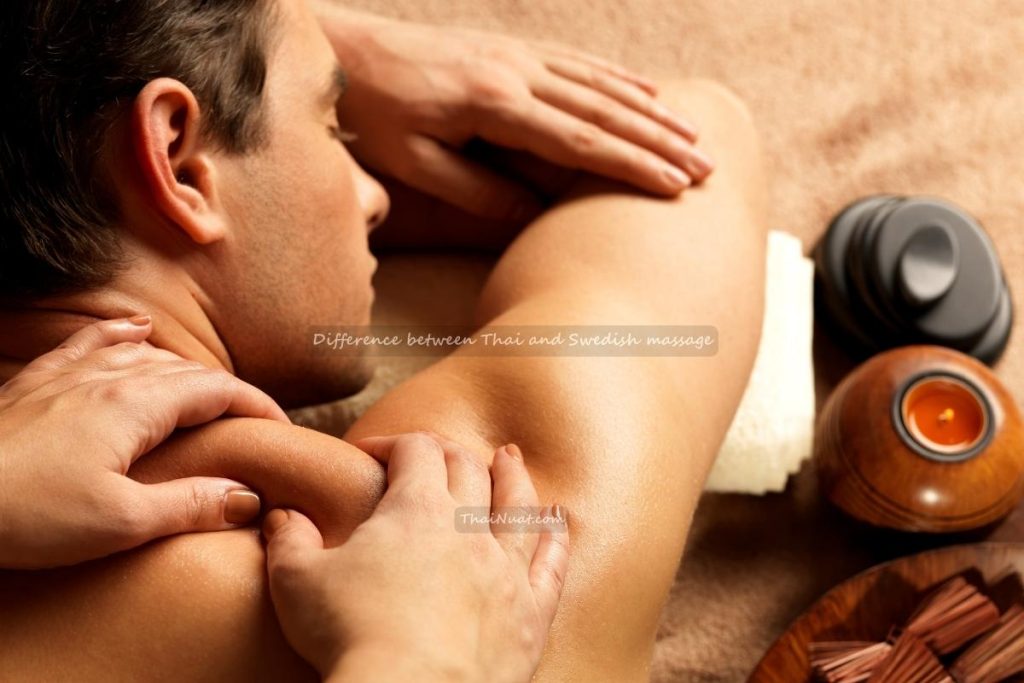
Swedish massage employs gentle strokes and kneading motions:
Effleurage (Long Strokes)
Smooth, gliding movements warm up muscles and ease tension.
Petrissage (Kneading)
Circular kneading targets deeper layers of muscles.
Tapotement (Tapping)
Rhythmic tapping enhances circulation.
Friction
Circular or linear motions break up adhesions in muscle fibers.
Oil Usage
Therapists use massage oil or lotion to reduce friction and improve the flow of movements.
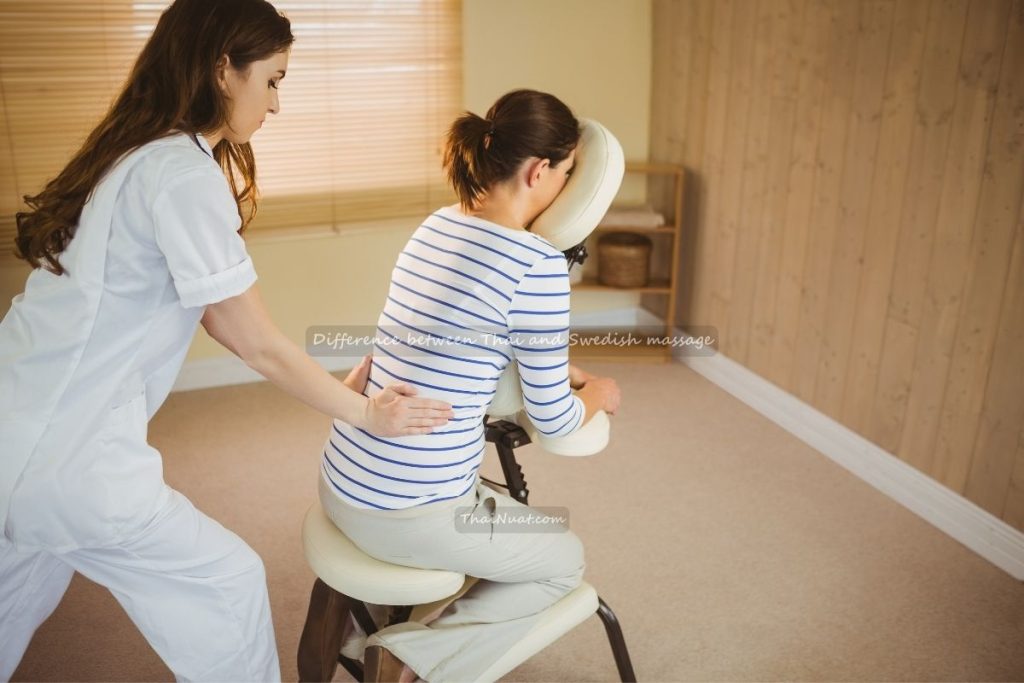
The difference between Thai and Swedish massage is evident in these techniques. Thai massage emphasizes active stretching and pressure, while Swedish massage focuses on relaxation through soothing strokes.
Experience and Environment: A Comparison
The Thai Massage Experience
Setting:
Thai massage often takes place on a mat or floor, allowing freedom for stretches and movements.
Clothing
Clients wear loose, comfortable clothing for easy movement.
Active Participation
Expect to engage with stretches, bends, and poses guided by the practitioner.
Dynamic
The session feels energizing and interactive.
The Swedish Massage Experience
Setting
Swedish massage is performed on a padded massage table in a tranquil setting.
Clothing
Clients undress to their comfort level and are covered with a sheet or towel.
Passive
The therapist does all the work, and the client simply relaxes.
Relaxing
Sessions are serene and calming, aimed at stress relief.
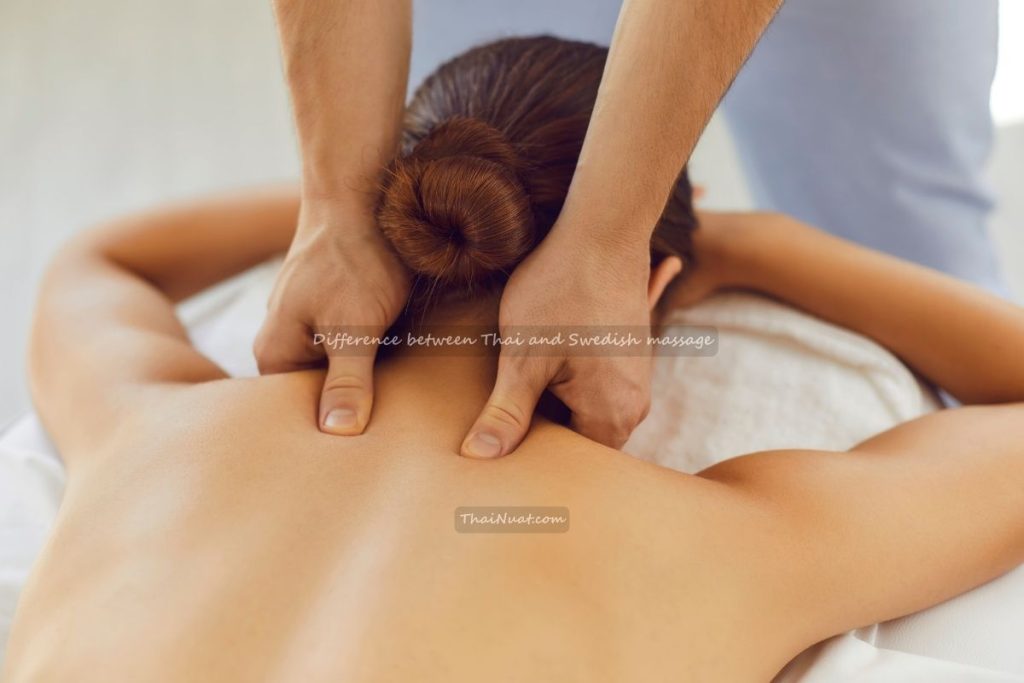
The difference between Thai and Swedish massage becomes clear in the way clients experience and engage with each type of therapy.
Benefits: Which Massage is Right for You?
Benefits of Thai Massage
Improved Flexibility
The stretching movements enhance joint and muscle flexibility.
Energy Balance
Releases blocked energy for a sense of overall well-being.
Pain Relief
Targets chronic pain, particularly in the back, shoulders, and neck.
Stress Reduction
Combines physical and mental relaxation techniques.
Benefits of Swedish Massage
Stress Relief
Perfect for relaxing the mind and body.
Improved Circulation
Long strokes promote better blood flow.
Muscle Recovery
Ideal for athletes or those with muscle soreness.
Better Sleep
Reduces anxiety and promotes deeper rest.
Understanding the difference between Thai and Swedish massage helps in selecting the treatment that best aligns with your needs.
When to Choose Thai Massage Over Swedish Massage

Opt for Thai Massage If:
- You enjoy active, engaging experiences.
- You’re looking for flexibility improvement and energy balance.
- You want a therapeutic, full-body workout.
Opt for Swedish Massage If:
- You prefer a passive, deeply relaxing experience.
- Your primary goal is stress relief and muscle recovery.
- You enjoy soothing touch and the use of oils.
The difference between Thai and Swedish massage also lies in their suitability for different preferences and needs.
Cultural Significance of Thai and Swedish Massage
Thai Massage in Thai Culture
In Thailand, massage is considered a sacred art passed down through generations. It’s a symbol of care and hospitality, deeply ingrained in Thai customs and wellness traditions.
Swedish Massage in Global Wellness
Swedish massage, though rooted in Sweden, has become a global standard for therapeutic relaxation. It is the foundation for many modern massage techniques worldwide.
Final Thoughts: Understanding the Difference Between Thai and Swedish Massage
Thai and Swedish massages are exceptional in their own ways, offering unique paths to relaxation and wellness. While Thai massage invigorates and stretches the body with yoga-inspired movements, Swedish massage soothes and calms with gentle strokes and kneading.
Choosing between the two depends on your personal preferences, physical needs, and wellness goals. Whether you seek energy balance or muscle relaxation, understanding the difference between Thai and Swedish massage ensures you select the therapy that fits you best.
Conclusion
By knowing the difference between Thai and Swedish massage, you’re empowered to make the best choice for your relaxation and health journey.
FAQs
What is the main difference between Thai and Swedish massage?
The main difference between Thai and Swedish massage lies in their techniques. Thai massage involves stretching and acupressure, while Swedish massage focuses on long strokes and kneading for relaxation.
Which is better, Thai or Swedish massage?
It depends on your needs. Thai massage is ideal for improving flexibility and energy balance, while Swedish massage is better for stress relief and muscle relaxation.
Do Thai and Swedish massages use oil?
Swedish massage uses oils to enhance relaxation and smooth movements, while Thai massage typically does not require oils.
Can I wear clothes during a Thai or Swedish massage?
In Thai massage, clients remain fully clothed in loose clothing. In Swedish massage, clients undress to their comfort level and are covered with a sheet or towel.
Is Thai massage more painful than Swedish massage?
Thai massage involves deep stretching and pressure, which some may find intense but not necessarily painful. Swedish massage is gentler and more soothing, making it less likely to cause discomfort.