



- Introduction
- Why Daily Stretching Can Be Helpful
- Stretching And Body Balance
- Warm Up Before Deeper Stretching
- Understand Dynamic And Static Stretching
- Stretch Gently Without Bouncing
- Begin With A Comfortable Neck Stretch
- Add Gentle Shoulder Rolls
- Stretch The Chest Carefully
- Try An Upper-Back Stretch
- Use A Gentle Side Stretch
- Stretch The Lower Back With Care
- Open The Hips Gently
- Stretch The Hip Flexors
- Stretch The Hamstrings Without Forcing
- Add A Standing Quadriceps Stretch
- Stretch The Calves
- Include Ankle Mobility
- Add A Simple Balance Exercise
- Try Heel-To-Toe Standing
- Create A Short Morning Routine
- Stretch During Work Breaks
- Use Stretching After Walking Or Exercise
- Build The Routine Gradually
- Breathe Normally
- Know When To Stop
- Situations That Need Extra Care
- Common Stretching Mistakes
- A Simple Full-Body Routine
- How Often Should You Stretch?
- Conclusion
- FAQ
- What Are The Best Daily Stretching Tips For Beginners?
- Can Stretching Improve Body Balance?
- How Long Should I Hold A Stretch?
- Should I Stretch Every Day?
- Is It Better To Stretch In The Morning Or Evening?
- Should I Warm Up Before Stretching?
- Is Pain Normal During Stretching?
- Which Stretches Help After Sitting?
- Do I Need Equipment For A Stretching Routine?
- When Should I Ask A Healthcare Professional About Stretching?
Introduction
Stretching can be a simple way to care for your muscles and joints, especially when you spend long hours sitting, standing, travelling, or using a computer. A short routine may help you move more comfortably and become more aware of your posture and body position.
The best daily stretching tips do not require advanced flexibility, expensive equipment, or a long workout. Gentle movements for the neck, shoulders, back, hips, and legs can fit into an ordinary morning, work break, or evening routine.
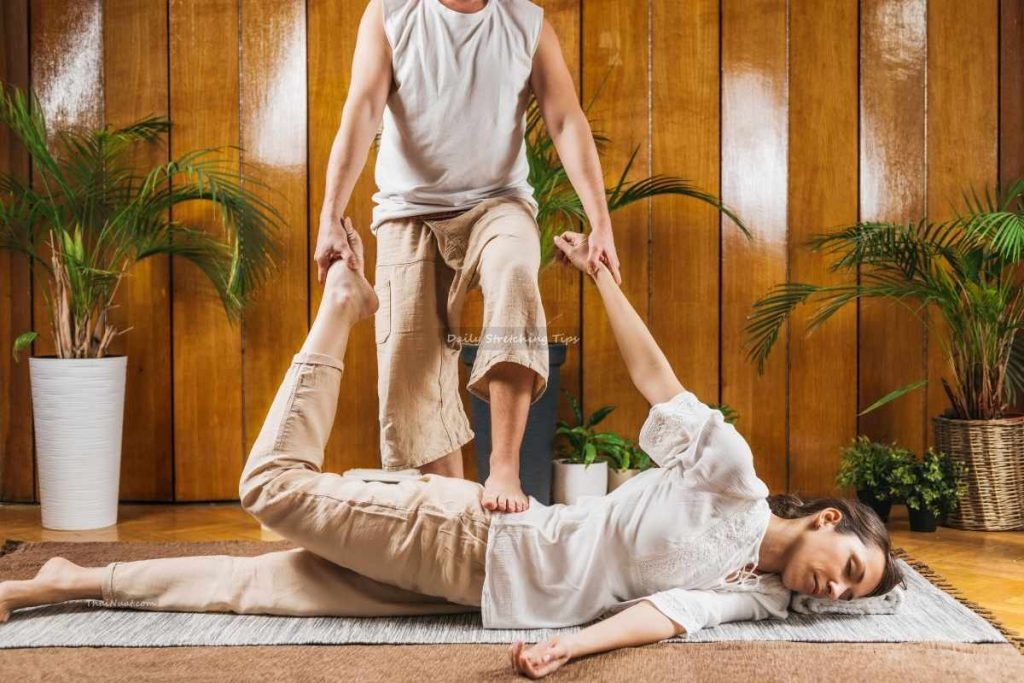
Stretching and balance are related, but they are not exactly the same. Stretching mainly supports flexibility and range of motion, while balance also depends on muscle strength, coordination, vision, joint awareness, and the nervous system. For this reason, a useful routine should combine gentle stretches with simple standing balance movements.
This guide shares practical daily stretching tips for beginners and anyone who wants a calmer, more consistent approach to mobility. The movements should feel gentle rather than painful. People with an injury, medical condition, recent surgery, pregnancy, severe dizziness, or ongoing pain should ask a qualified healthcare professional which exercises are suitable.
👉 “Readers interested in broader self-care routines may also explore these Natural Thai Skincare Ingredients for Healthy-looking Skin.”
Why Daily Stretching Can Be Helpful
Regular stretching may help maintain flexibility and make everyday movement feel easier. It can be useful for reaching, bending, turning, walking, getting out of a chair, and completing daily tasks.
The NHS explains that flexibility exercises can support health and mobility and recommends building up gradually rather than doing too much at once. Strength and flexibility work may also contribute to better balance and joint comfort.
Useful daily stretching tips may support:
- Comfortable movement
- Joint mobility
- Body awareness
- Posture
- Coordination
- Relaxation
- Movement after sitting
- Preparation for daily activity
- A regular wellness routine
- Gentle recovery after exercise
Stretching should not be presented as a guaranteed cure for pain, poor posture, or injury. Its effects vary according to the person, technique, consistency, activity level, and underlying health.
Stretching And Body Balance
Good body balance helps you remain steady when standing, walking, turning, reaching, or changing direction. Flexibility can support these movements, but strong legs, hips, back, and abdominal muscles are also important.
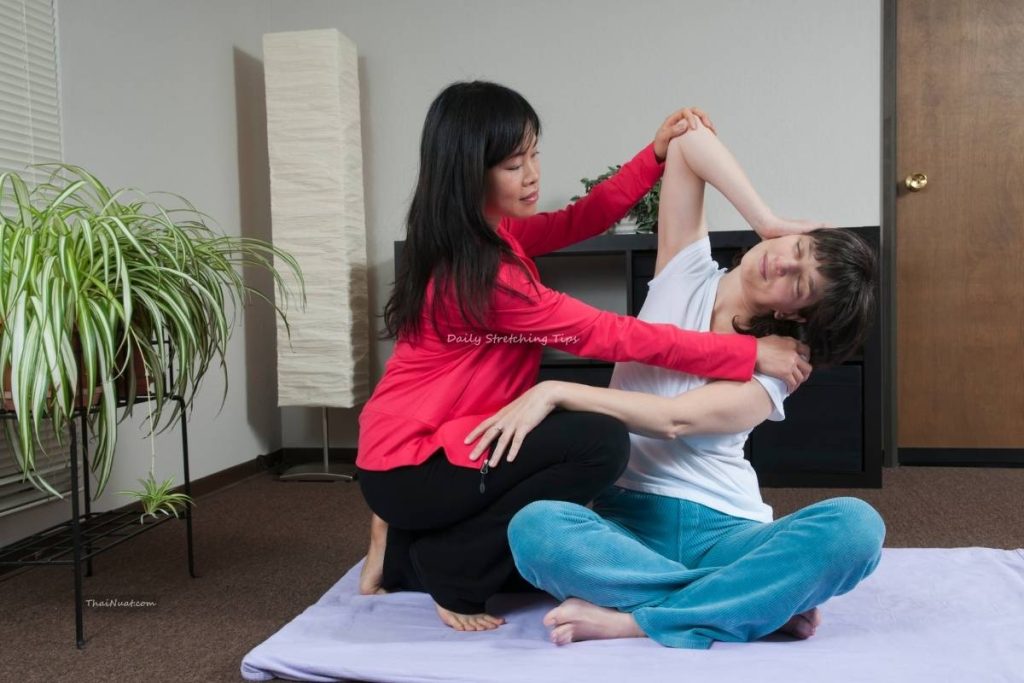
The CDC includes activities such as heel-to-toe walking, standing on one leg, and rising from a chair among useful balance activities. It also notes that strengthening the legs, back, and abdominal muscles can support balance.
This means daily stretching tips work best when combined with:
- Regular walking
- Suitable strength exercises
- Simple balance practice
- Supportive footwear
- Good lighting at home
- Clear walking areas
- Enough rest
- Appropriate medical care when needed
A stretching routine may help you move more freely, but it should not replace strength or balance exercises.
Warm Up Before Deeper Stretching
Stretching cold muscles too aggressively may lead to discomfort or strain. Before a longer stretching session, spend a few minutes moving gently.
A simple warm-up can include:
- Walking around the room
- Marching slowly in place
- Rolling the shoulders
- Moving the arms gently
- Bending and straightening the knees
- Turning the upper body carefully
- Taking several relaxed breaths
Mayo Clinic advises warming up with light activity before stretching, keeping movements gentle, avoiding bouncing, and stopping before a stretch becomes painful.
One of the most important daily stretching tips is to avoid forcing a stiff body immediately into a deep position. Begin with easy movement and gradually increase the range.
Understand Dynamic And Static Stretching
Dynamic stretching involves controlled movement through a comfortable range. Examples include gentle arm circles, ankle circles, or slow leg movements.
Static stretching means moving into a position and holding it without bouncing. Examples include holding a calf stretch against a wall or gently stretching the back of the thigh.
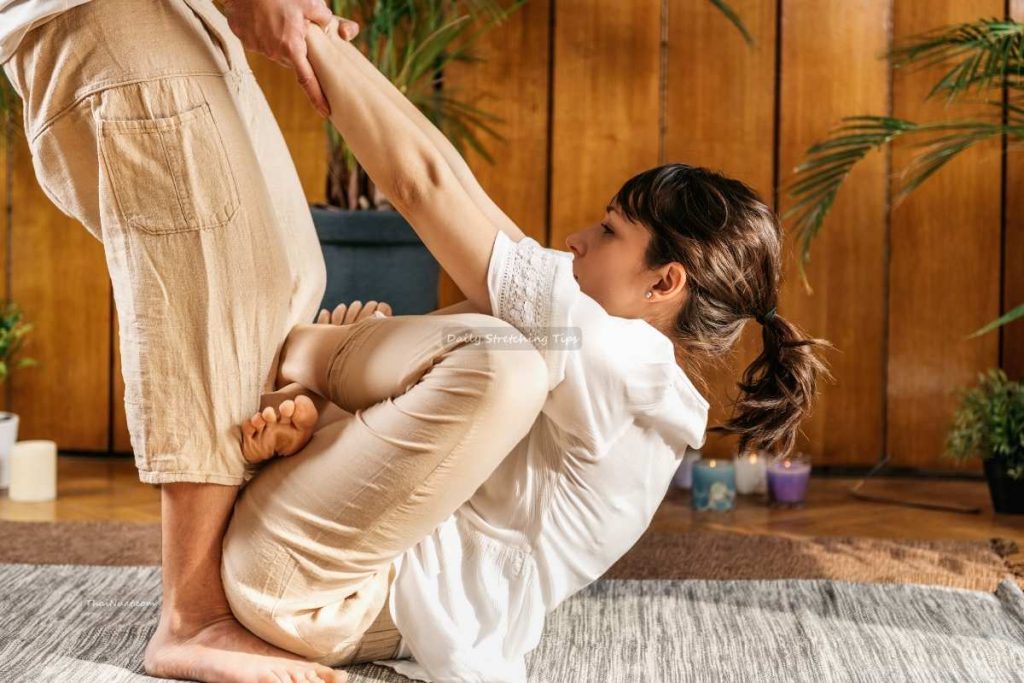
Dynamic movements often suit the beginning of an active routine because they help the body prepare for movement. Static stretches are commonly used after activity or as part of a separate flexibility session.
Both approaches can be useful. The right choice depends on your goals, health, and the activity you are preparing for.
Practical daily stretching tips include using slow dynamic movements during a warm-up and saving longer static holds for when your muscles feel warmer.
Stretch Gently Without Bouncing
A stretch should create mild tension, not sharp pain. Move slowly into the position and stop when you notice a comfortable pulling feeling.
Avoid bouncing because sudden repeated movements may cause you to stretch farther than intended. Mayo Clinic recommends keeping stretches slow and gentle, breathing normally, and reducing the movement if pain occurs.
While stretching:
- Keep breathing
- Relax unnecessary tension
- Avoid sudden pulling
- Keep joints in comfortable positions
- Do not compete with another person
- Stop if you feel sharp pain
- Move out of the stretch slowly
These daily stretching tips can help make a routine calmer and safer.
Begin With A Comfortable Neck Stretch
Neck tension can develop after long periods of reading, driving, looking at a phone, or working at a computer.
To stretch the side of the neck:
- Sit or stand tall
- Keep the shoulders relaxed
- Slowly tilt one ear toward the same-side shoulder
- Stop when you feel a gentle stretch
- Keep the opposite shoulder down
- Hold briefly while breathing
- Return to the centre
- Repeat on the other side
Do not pull hard on the head. Avoid making fast circles with the neck, particularly if you experience dizziness or have a neck condition.
Good daily stretching tips should make movement feel controlled. The goal is not to force your ear all the way to your shoulder.
Add Gentle Shoulder Rolls
Shoulder rolls are easy to perform at home, at work, or while travelling.
To practise:
- Sit or stand comfortably
- Lift the shoulders gently toward the ears
- Move them backward
- Lower them slowly
- Repeat several times
- Change direction if comfortable
Keep the movement smooth and avoid pushing through pain.
Shoulder rolls can be combined with relaxed breathing. They may be especially useful after sitting in one position for a long time.
Among simple daily stretching tips, this movement is practical because it requires no equipment and very little space.
Stretch The Chest Carefully
Sitting with the shoulders rounded forward may leave the front of the chest feeling tight.
A simple standing chest stretch can be performed near a wall or doorway:
- Stand upright
- Place one forearm against a stable surface
- Keep the shoulder relaxed
- Turn the body away slowly
- Stop at a gentle stretch across the chest
- Breathe normally
- Return carefully
- Repeat on the other side
Do not push the shoulder joint into an uncomfortable position. People with shoulder pain or a previous injury may need a modified movement.
One of the best daily stretching tips is to reduce the range whenever a movement feels pinched rather than gently stretched.
Try An Upper-Back Stretch
The upper back may feel stiff after desk work, carrying bags, or long journeys.
To stretch the upper back:
- Sit or stand tall
- Bring both arms forward
- Gently hold one hand with the other
- Reach the hands away from the chest
- Allow the upper back to round slightly
- Keep the neck relaxed
- Breathe slowly
- Return to a neutral position
The movement should feel broad and gentle across the upper back.
Avoid pulling suddenly. You do not need to round the lower back deeply.
Adding an upper-back movement to your daily stretching tips can help balance routines that already include chest and shoulder stretches.
Use A Gentle Side Stretch
A side stretch may help create movement through the side of the torso.
To practise:
- Stand with the feet comfortably apart
- Keep the knees soft
- Raise one arm overhead
- Lean slightly toward the opposite side
- Keep both feet grounded
- Avoid twisting forward
- Breathe into the side of the body
- Return to the centre
- Repeat on the other side
Move only as far as you can without losing your balance. You may stand near a wall or sturdy chair for support.
Safe daily stretching tips should always allow you to use support when needed.
Stretch The Lower Back With Care
Lower-back discomfort has many possible causes, and not every stretch suits every person. Avoid strong twisting, deep bending, or any movement that increases pain.
A gentle seated movement may be suitable for some people:
- Sit upright on a stable chair
- Place both feet flat on the floor
- Rest the hands on the thighs
- Slowly lean forward a small amount
- Keep the movement comfortable
- Pause briefly
- Return using control
Another option is to lie on your back and bring one knee toward the body, provided this is comfortable and suitable for you.
Mayo Clinic notes that exercise may help some people manage back discomfort, but the correct exercises depend on the person and condition.
The safest daily stretching tips avoid promising that one back stretch will work for everyone.
Open The Hips Gently
The hips may feel stiff after prolonged sitting. Gentle hip movement can be included in a daily routine.
A seated hip stretch can be performed as follows:
- Sit on a stable chair
- Keep one foot flat on the floor
- Place the opposite ankle gently over the thigh
- Keep the spine long
- Lean forward slightly from the hips
- Stop when you feel a gentle stretch
- Return slowly
- Change sides
Do not press hard on the raised knee. People with hip, knee, or lower-back conditions may need a different position.
These daily stretching tips are not about reaching a perfect shape. A smaller comfortable movement is still useful.
Stretch The Hip Flexors
Hip flexors are located near the front of the hip. They may feel tight after long periods of sitting.
A supported standing hip-flexor stretch may be easier for beginners:
- Stand beside a wall or chair
- Step one foot slightly backward
- Keep both feet facing forward
- Bend the front knee gently
- Keep the body upright
- Shift the hips forward slightly
- Feel a mild stretch at the front of the rear hip
- Return and change sides
Avoid arching the lower back. Keep the abdominal area gently engaged and use support.
Including the hip flexors in your daily stretching tips may help create a more balanced full-body routine.
Stretch The Hamstrings Without Forcing
The hamstrings run along the back of the thighs. Many people try to stretch them by bending deeply and reaching for the toes, but this can place unnecessary pressure on the lower back.
A supported version can be easier:
- Stand behind a stable chair
- Place one heel slightly forward
- Keep that knee gently straight
- Bend the supporting knee slightly
- Keep the back long
- Lean forward from the hips
- Stop at a mild stretch behind the thigh
- Return slowly
- Repeat on the other side
There is no need to touch your toes.
One of the most useful daily stretching tips is to focus on where you feel the stretch rather than how far you can reach.
Add A Standing Quadriceps Stretch
The quadriceps are the muscles at the front of the thighs.
For a standing stretch:
- Stand beside a wall or stable chair
- Hold the support with one hand
- Bend one knee
- Bring the heel gently toward the body
- Hold the ankle or trouser leg if comfortable
- Keep the knees relatively close
- Keep the body upright
- Release slowly
- Repeat on the other side
Do not pull the foot forcefully. Stop if the knee feels painful.
People who cannot comfortably hold the ankle can use a towel or perform a different supported movement.
Balance support is an essential part of daily stretching tips, especially during one-legged positions.
Stretch The Calves
Calf flexibility supports walking, standing, and ankle movement.
A wall calf stretch can be performed as follows:
- Face a wall
- Place both hands against it
- Step one foot backward
- Keep the back heel on the floor
- Keep the toes facing forward
- Bend the front knee gently
- Keep the rear leg comfortably straight
- Lean forward until you feel a mild calf stretch
- Change sides
For a different part of the calf, slightly bend the back knee while keeping the heel down.
Simple calf work is useful in daily stretching tips because the calves are active during walking, stairs, and long periods of standing.
Include Ankle Mobility
Ankle mobility can influence walking and balance.
While sitting in a stable chair:
- Lift one foot slightly
- Point and flex the ankle slowly
- Make small controlled circles
- Change direction
- Lower the foot
- Repeat on the other side
Keep the movement gentle. Large circles are not necessary.
Ankle movements can be especially useful during travel or after sitting for a long time. However, sudden swelling, redness, severe pain, or a recent injury should be assessed rather than stretched casually.
Useful daily stretching tips should recognise when exercise is not the appropriate first response.
Add A Simple Balance Exercise
After stretching, try a short balance activity near a sturdy support.
A basic supported balance exercise:
- Stand beside a kitchen counter or heavy chair
- Keep the feet hip-width apart
- Hold the support
- Shift your weight slowly onto one leg
- Lift the other foot only slightly
- Keep the body upright
- Lower the foot
- Repeat on the other side
As confidence improves, you may use lighter hand support. Do not close your eyes or remove support unless it is clearly safe.
The CDC lists standing on one foot as an example of a balance activity.
Combining this movement with daily stretching tips creates a routine that addresses both mobility and steadiness.
Try Heel-To-Toe Standing
Heel-to-toe standing narrows your base of support and can challenge balance.
To practise safely:
- Stand next to a counter
- Place one foot directly in front of the other
- Keep the heel of the front foot near the toes of the back foot
- Use hand support
- Look forward
- Hold briefly
- Step out carefully
- Change which foot is in front
You can begin with the feet slightly apart rather than directly in one line.
The NHS provides home balance exercises and advises building up gradually.
When following daily stretching tips, remember that balance exercises should be performed in a safe area without loose rugs, pets, toys, or other obstacles.
Create A Short Morning Routine
A morning routine can help you begin moving after sleep.
A simple sequence may include:
- Gentle marching
- Shoulder rolls
- Neck tilts
- Side stretches
- Supported hip-flexor stretches
- Calf stretches
- Ankle movements
- A brief supported balance exercise
The routine does not need to be long. Five or ten calm minutes may be easier to maintain than an ambitious programme.
Consistency is often more practical than intensity. Choose daily stretching tips that fit your schedule and can be repeated without causing pain or exhaustion.
Stretch During Work Breaks
Long periods of sitting may leave the neck, shoulders, back, hips, and legs feeling stiff.
During the workday, consider:
- Standing up regularly
- Walking briefly
- Rolling the shoulders
- Opening the chest
- Moving the ankles
- Stretching the calves
- Changing your sitting position
- Adjusting the screen and chair
Mayo Clinic Sports Medicine suggests taking regular movement and stretching breaks during the workday rather than remaining in one position for hours.
Workplace daily stretching tips should be gentle and practical. They do not need to involve deep stretches or special clothing.
Use Stretching After Walking Or Exercise
After walking or another suitable activity, your muscles may feel warmer and more prepared for gentle static stretching.
You might stretch:
- Calves
- Front thighs
- Back thighs
- Hips
- Chest
- Shoulders
Move slowly and breathe. The NHS offers a short post-exercise stretching routine intended to help the body cool down gradually.
These daily stretching tips can be adapted to your activity. A long walk may call for more attention to the legs, while desk work may require additional shoulder and chest movement.
Build The Routine Gradually
Doing too much too soon can cause soreness and make it harder to maintain the habit.
Begin with:
- A few comfortable movements
- Short holding times
- One repetition on each side
- Support during standing exercises
- Rest between movements
- A smaller range of motion
Over time, you may add another stretch, repeat a movement, or hold a comfortable position slightly longer.
The NHS advises building flexibility exercises gradually.
Gradual progress is one of the most important daily stretching tips for beginners.
Breathe Normally
Some people hold their breath while concentrating or trying to stretch farther.
Instead:
- Inhale calmly before the movement
- Exhale as you ease into the stretch
- Continue breathing normally
- Relax the jaw and shoulders
- Avoid straining
Breathing should remain comfortable. Stop if you feel light-headed, unusually short of breath, or unwell.
Breathing does not need to follow a complicated pattern. The aim of these daily stretching tips is to make movement steady and relaxed.
Know When To Stop
Stretching should not cause sharp, burning, electric, or severe pain.
Stop the movement if you experience:
- Sudden pain
- Numbness
- Tingling
- Dizziness
- Chest pain
- Breathing difficulty
- Loss of balance
- New weakness
- Unusual swelling
- A feeling that a joint may give way
Seek appropriate medical help for severe, sudden, or persistent symptoms.
Gentle tension may be normal, but pain is not a target. Reliable daily stretching tips always prioritise safety over depth.
Situations That Need Extra Care
A standard stretching routine may need changes for people with:
- Recent surgery
- A new injury
- Osteoporosis
- Joint replacement
- Severe arthritis
- Balance disorders
- Pregnancy
- Neurological conditions
- Heart or circulation concerns
- Persistent back or neck pain
- Unexplained dizziness
- Frequent falls
The NHS advises people with injuries, medical conditions, or pregnancy to ask a healthcare professional about suitable modifications.
A physiotherapist or other qualified professional can help adapt daily stretching tips to individual needs.
Common Stretching Mistakes
Avoid these common mistakes:
- Stretching cold muscles aggressively
- Bouncing
- Holding your breath
- Forcing a joint
- Ignoring pain
- Comparing your flexibility with others
- Stretching only one side
- Using unstable furniture for support
- Moving too quickly
- Expecting immediate results
- Stretching an acute injury without advice
- Relying on stretching without strength work
Stretching is not a competition. Progress may be slow and can vary from one side of the body to the other.
A Simple Full-Body Routine
A basic routine could include:
- Two minutes of gentle walking
- Shoulder rolls
- Side neck stretches
- A chest stretch
- An upper-back stretch
- A standing side stretch
- A supported hip-flexor stretch
- A hamstring stretch
- A calf stretch
- Ankle circles
- Supported single-leg standing
Perform each movement gently and use a wall, counter, or sturdy chair when needed.
This sequence offers practical daily stretching tips without requiring a gym or specialised equipment.
How Often Should You Stretch?
The right frequency depends on your routine, activity level, health, and goals.
A short gentle session can be performed regularly when it feels comfortable. You can also stretch after exercise or take movement breaks during a long working day.
Mayo Clinic suggests working the major muscle groups regularly and holding gentle static stretches rather than bouncing. The NHS also recommends regular flexibility practice and gradual progression.
The best schedule is one you can follow consistently without pain. Your daily stretching tips can be adjusted when you feel tired, sore, or unusually stiff.
👉 “Readers interested in improving flexibility and relaxation may also learn more about how pressure is used in traditional Thai massage and what to expect during a session.”
Conclusion
Simple daily stretching tips can help you create a regular routine for flexibility, mobility, posture awareness, and comfortable movement. You do not need to perform advanced poses or force your body into deep positions.
Begin with a gentle warm-up, move slowly, breathe normally, and stop before tension becomes pain. Stretch the major areas of the body, including the neck, shoulders, chest, back, hips, thighs, calves, and ankles.
For better body balance, combine daily stretching tips with walking, suitable strength exercises, and supported balance movements. Flexibility alone does not control balance, but it can support the comfortable movement needed for everyday activities.
Build the routine gradually and use stable support whenever necessary. Anyone with an injury, medical condition, pregnancy, repeated falls, or persistent pain should seek individual guidance before beginning unfamiliar exercises.
A short routine practised consistently can be more useful than an intense session performed only occasionally. Choose comfortable movements, respect your current ability, and allow flexibility and balance to develop over time.
FAQ
What Are The Best Daily Stretching Tips For Beginners?
Begin with gentle movement, warm up first, avoid bouncing, breathe normally, and stop before a stretch becomes painful. Use stable support during standing movements and increase the routine gradually.
Can Stretching Improve Body Balance?
Stretching may support mobility and comfortable movement, but balance also depends on strength, coordination, vision, and body awareness. Combine stretching with suitable strength and balance exercises.
How Long Should I Hold A Stretch?
A gentle static stretch is often held for a short period while breathing normally. The exact time depends on the movement and your ability. Avoid forcing the position or holding through pain.
Should I Stretch Every Day?
Gentle stretching may fit into a daily routine when it feels comfortable. You can also stretch several times per week or after exercise. Consistency and safe technique are more important than forcing a strict schedule.
Is It Better To Stretch In The Morning Or Evening?
Either time can work. Morning stretching may help you begin moving after sleep, while evening stretching may feel relaxing after daily activity. Choose the time that fits your routine.
Should I Warm Up Before Stretching?
Yes, especially before deeper static stretches. A few minutes of light walking, marching, or gentle joint movement can help prepare the body.
Is Pain Normal During Stretching?
No. A mild pulling sensation may be expected, but sharp, burning, severe, or electric pain is a reason to stop. Seek professional advice for persistent symptoms.
Which Stretches Help After Sitting?
Gentle chest, shoulder, hip-flexor, hamstring, calf, and ankle movements may help after prolonged sitting. Stand and walk briefly before beginning deeper stretches.
Do I Need Equipment For A Stretching Routine?
No. Most basic movements require only comfortable clothing and a safe space. A wall, counter, or sturdy chair can provide balance support.
When Should I Ask A Healthcare Professional About Stretching?
Ask for guidance if you have a recent injury, surgery, pregnancy, osteoporosis, joint replacement, severe pain, frequent falls, dizziness, or a medical condition that affects movement or balance.