



- Introduction
- What Makes Thai Massage Different
- Understanding Pressure Levels
- Palm Pressure
- Thumb Pressure
- Finger Pressure
- Forearm Pressure
- Elbow Pressure
- Knee Pressure
- Foot Pressure
- Rhythmic Compression
- Pressure Along Traditional Sen Lines
- Assisted Stretching
- Gentle Rocking Techniques
- Body Weight And Practitioner Positioning
- What Thai Massage Pressure Should Feel Like
- How To Communicate About Pressure
- Light Pressure Is Not A Weak Treatment
- Deep Pressure Is Not Suitable For Everyone
- Thai Massage During Pregnancy
- Thai Massage For Older Adults
- Pressure Around The Neck
- Pressure Around The Lower Back
- Pressure On The Legs
- Pressure On The Feet
- When Massage Should Be Postponed
- Choosing A Qualified Practitioner
- Preparing For A Thai Massage
- What To Do After The Session
- Common Myths About Massage Pressure
- Common Mistakes To Avoid
- Conclusion
- FAQ
- What Are Thai Massage Pressure Techniques?
- Should Thai Massage Feel Painful?
- Is Strong Thai Massage Better Than Gentle Massage?
- What Is Palm Pressure In Thai Massage?
- Is Elbow Pressure Safe?
- Can I Ask For Less Pressure?
- Who Should Avoid Deep Thai Massage?
- Is Thai Massage Safe During Pregnancy?
- What Should I Tell The Practitioner Before A Session?
- What Should I Do If I Feel Numbness During Massage?
Introduction
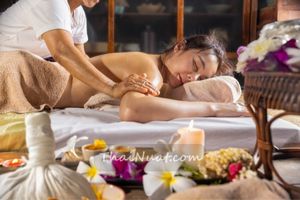
Thai massage is known for its combination of rhythmic pressure, assisted movement, stretching, and careful body positioning. Unlike many oil-based massages, traditional Thai massage is often performed through comfortable clothing on a floor mat.
The most important part of the experience is not how strong the massage feels. Effective Thai massage pressure techniques should be controlled, appropriate for the person receiving the treatment, and adjusted throughout the session.
A trained practitioner may use the palms, thumbs, fingers, forearms, elbows, knees, or feet. Different tools create different types of pressure. Broad palm pressure may feel gentle and relaxing, while an elbow can create a more focused and intense sensation.
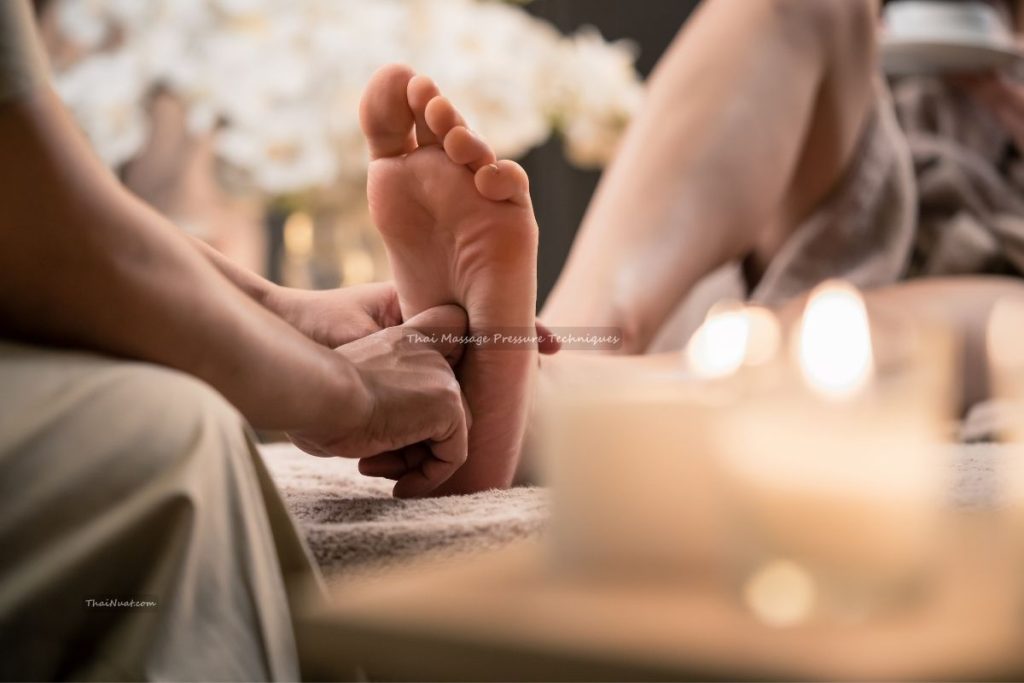
This guide explains common Thai massage pressure techniques, how pressure levels differ, what a session may feel like, and how to communicate with a practitioner. It also covers important safety points for people with injuries, health conditions, pregnancy, or sensitivity to strong massage.
Thai massage can be part of a wellness routine, but it should not replace medical diagnosis or emergency care. Severe, unexplained, or persistent symptoms should be assessed by an appropriate healthcare professional.
👉 “Readers interested in supporting relaxation beyond massage may also explore these Natural Thai Body Care Tips For Everyday Wellness.”
What Makes Thai Massage Different
Traditional Thai massage, sometimes called Nuad Thai, differs from many common spa massages. The client usually remains clothed, and oil may not be used during a traditional session.
The practitioner may work with the client in several positions, including:
- Lying on the back
- Lying on the stomach
- Lying on one side
- Sitting
- Supported stretching positions
The session may combine:
- Rhythmic compression
- Palm pressure
- Thumb pressure
- Assisted stretching
- Gentle rocking
- Joint movement
- Forearm pressure
- Elbow pressure
- Knee support
- Foot pressure
These Thai massage pressure techniques are often linked together in a flowing sequence rather than used as isolated movements.
Understanding Pressure Levels
Pressure should not be described only as light, medium, or strong. The sensation also depends on the area being treated, the practitioner’s technique, the client’s body position, and the amount of time pressure is applied.
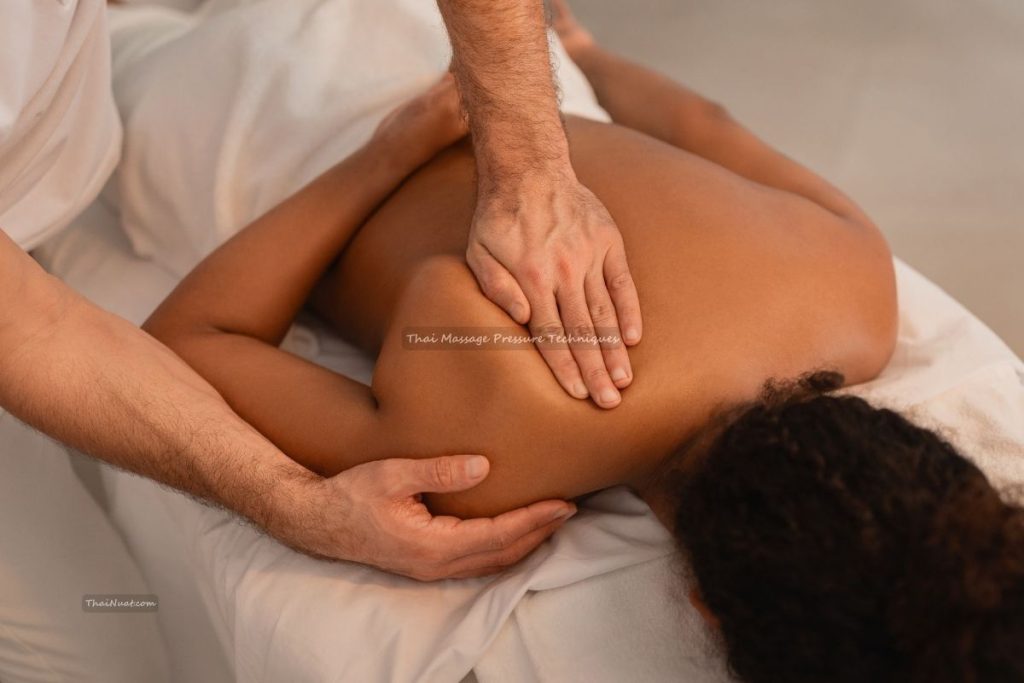
A gentle pressure on a sensitive area may feel intense, while deeper pressure on a large muscle may feel comfortable.
Pressure levels may be influenced by:
- Muscle size
- Muscle tension
- Previous injuries
- Pain sensitivity
- Age
- Flexibility
- Fatigue
- Stress
- Body position
- Practitioner experience
Good Thai massage pressure techniques should begin carefully. The practitioner can then adjust the intensity after observing the client’s response.
Stronger pressure is not automatically more effective. Excessive force can cause pain, bruising, irritation, or injury.
Palm Pressure
Palm pressure is one of the most common Thai massage pressure techniques. It spreads force over a wider area, making it suitable for warming the body and working on larger muscle groups.
A practitioner may use one palm, both palms, or one hand placed over the other.
Palm pressure is often used on:
- The back
- The thighs
- The calves
- The shoulders
- The arms
- The hips
- The feet
The movement may be slow and steady or applied in a rhythmic pattern.
Because the pressure is broad, palm techniques often feel less sharp than thumb or elbow pressure. They may be used near the beginning of a session before more focused work.
Thumb Pressure
Thumb pressure creates a smaller and more focused point of contact. It may be used along muscles, around the shoulders, on the hands, or on the feet.
Among common Thai massage pressure techniques, thumb pressure requires careful control because it can quickly feel intense.
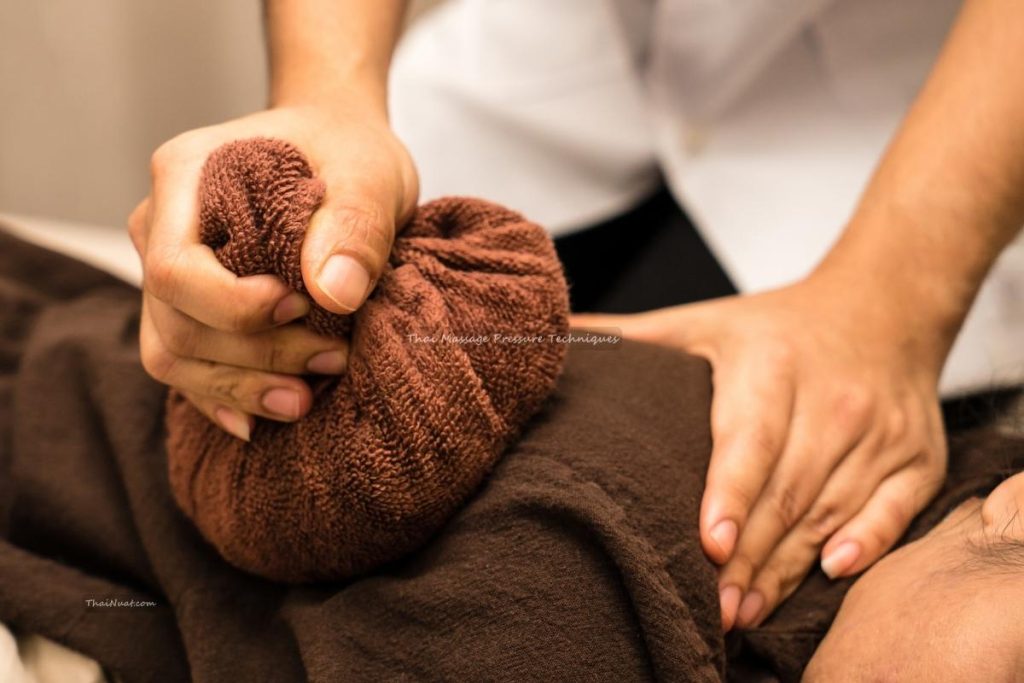
A practitioner may use:
- One thumb
- Both thumbs together
- Alternating thumbs
- A thumb supported by the other hand
- Slow pressure along a line
Thumb pressure should not feel sharp, electric, or unbearable. Sensitive areas require less force.
A skilled practitioner should avoid pressing directly on bones, irritated nerves, swollen areas, or recent injuries.
Finger Pressure
Finger pressure may be used for smaller areas where broad palm pressure is not practical.
It can be applied around:
- The hands
- The fingers
- The feet
- The face
- The jaw
- The scalp
- Smaller muscles
This technique should remain gentle, especially around the face, neck, and joints.
Finger pressure can support precision, but it should not involve poking or sudden force. Controlled contact is an important part of safe Thai massage pressure techniques.
Forearm Pressure
Forearm pressure spreads force across a larger surface than an elbow. It can feel deep without being as sharply focused.
The practitioner may use the forearm on:
- The back
- The thighs
- The hips
- The shoulders
- The calves
Forearm pressure is often useful when a practitioner wants to work gradually across a large muscle area.
The technique may involve:
- Slow compression
- Gentle rolling
- Holding pressure
- Rhythmic movement
- Controlled body weight
The practitioner should use stable body positioning and avoid dropping weight suddenly.
Well-controlled forearm work can be one of the smoother Thai massage pressure techniques for people who prefer deeper pressure without a sharp sensation.
Elbow Pressure
Elbow pressure is more focused and can feel significantly stronger than palm or forearm pressure.
It may be used on large muscle groups such as:
- The upper back
- The hips
- The buttock muscles
- The thighs
- The calves
Elbow pressure is not suitable for every person or every area. It should not be used directly on the spine, bones, inflamed joints, or sensitive tissues.
A practitioner should control elbow pressure carefully and communicate with the client.
One of the most important things to understand about Thai massage pressure techniques is that elbows should not be used simply to make a session feel stronger. They are tools for focused pressure and require good training.
Knee Pressure
The knee may be used as a support or pressure tool in some Thai massage positions. It can create broad or moderately focused pressure depending on how it is placed.
Knee pressure may be used around:
- The thighs
- The hips
- The back of the legs
- Large muscle areas
This technique should be performed slowly and with control. The practitioner should not place direct pressure on joints, bones, or sensitive areas.
Knee techniques can feel intense because the practitioner may use body weight. The client should speak immediately if the pressure feels excessive.
Safe Thai massage pressure techniques always allow the client to ask for a lighter approach.
Foot Pressure
Some Thai massage methods use the practitioner’s feet for broad compression, especially on larger areas of the legs or back.
Foot pressure may involve:
- Standing with support
- Controlled stepping
- Gentle rocking
- Broad compression
- One foot used while holding a stable support
This method requires balance, training, and control. It should not feel like uncontrolled walking on the body.
Foot pressure is not appropriate for everyone. People with fragile bones, recent injuries, severe pain, or certain medical conditions may need a gentler method.
When foot-based Thai massage pressure techniques are used, the practitioner should explain what will happen and check whether the client is comfortable.
Rhythmic Compression
Rhythmic compression means applying and releasing pressure in a steady pattern. It may be performed with the palms, thumbs, forearms, or other parts of the body.
This can create a calming sense of movement and may help the practitioner assess how the muscles respond.
Rhythmic pressure may be:
- Slow
- Moderate
- Repeated
- Alternating
- Combined with breathing
- Used along the arms or legs
The movement should feel predictable rather than sudden.
Rhythmic compression is one of the most recognisable Thai massage pressure techniques because it can be used throughout a session to connect different areas of the body.
Pressure Along Traditional Sen Lines
Traditional Thai massage is often described in relation to sen lines. These are traditional pathways used within Thai healing theory.
A practitioner may apply pressure along selected pathways using the thumbs, palms, or fingers.
The exact approach depends on:
- The practitioner’s training
- The treatment style
- The client’s needs
- The body area
- The purpose of the session
Sen lines are part of traditional Thai theory and should not be confused with blood vessels, nerves, or other anatomical structures used in modern medicine.
Respectful explanations of Thai massage pressure techniques should recognise the traditional framework without making unsupported medical claims.
Assisted Stretching
Thai massage often includes assisted stretching. The practitioner may guide the arms, legs, hips, or upper body through a comfortable range of movement.
These stretches may resemble gentle yoga positions, but the client remains relaxed while the practitioner provides support.
Assisted stretching may involve:
- Hip opening
- Leg movement
- Shoulder movement
- Spinal rotation
- Side bending
- Ankle movement
- Gentle back extension
Stretching should be slow and controlled. It should not involve forcing the client into an advanced position.
Assisted stretching is often combined with Thai massage pressure techniques, but the two are different. Pressure works through compression, while stretching changes the position and length of muscles and joints.
Gentle Rocking Techniques
Rocking can be used to create relaxation and reduce resistance before deeper pressure or stretching.
The practitioner may gently move:
- The legs
- The hips
- The arms
- The shoulders
- The whole body
Rocking should feel smooth and repetitive. Sudden shaking or jerking is not appropriate.
This technique can help make Thai massage pressure techniques feel less intense because the body is not kept completely still.
Body Weight And Practitioner Positioning
Thai massage often uses the practitioner’s body weight rather than only arm strength.
Good body mechanics allow pressure to be:
- Steady
- Controlled
- Even
- Gradual
- Easier to adjust
The practitioner may lean forward, shift weight, or use a supported kneeling position.
Using body weight does not mean applying the maximum possible force. Skilled Thai massage pressure techniques depend on control, not power.
Poor positioning can make pressure feel sudden or unstable. A trained practitioner should remain balanced throughout the session.
What Thai Massage Pressure Should Feel Like
A suitable massage may create:
- Mild pressure
- Warmth
- Stretching
- A sense of release
- Temporary tenderness
- Relaxation
- Comfortable movement
It should not create:
- Sharp pain
- Electric pain
- Numbness
- Burning
- Breathing difficulty
- Dizziness
- Sudden weakness
- Severe joint pain
- A feeling that something is tearing
A deep sensation is not always dangerous, but it should remain tolerable and controlled.
The best Thai massage pressure techniques allow the client to breathe normally and relax rather than tense against the movement.
How To Communicate About Pressure
Clear communication is essential during Thai massage.
Before the session, tell the practitioner:
- Whether you prefer light, medium, or stronger pressure
- Which areas feel sensitive
- Whether you have pain
- Whether you have an injury
- Whether you are pregnant
- Whether you recently had surgery
- Whether you have osteoporosis
- Whether you take blood-thinning medication
- Whether you become dizzy easily
During the session, use simple phrases such as:
- Please use less pressure
- That area is sensitive
- Please stop
- That feels comfortable
- Can you avoid this area?
- Can we change the position?
Speaking up does not offend a professional practitioner. Adjusting Thai massage pressure techniques is a normal part of providing safe care.
Light Pressure Is Not A Weak Treatment
Some clients believe strong massage is always better. This is not true.
Light pressure may be more appropriate for:
- Beginners
- Older adults
- Sensitive areas
- People who bruise easily
- Relaxation sessions
- Recent fatigue
- Clients with low pain tolerance
- Some medical conditions
Gentle palm work, rocking, and controlled stretching can still provide a meaningful wellness experience.
The quality of Thai massage pressure techniques depends on timing, control, assessment, and communication rather than intensity alone.
Deep Pressure Is Not Suitable For Everyone
Deep pressure may feel helpful for some people, but it also carries greater risk when used carelessly.
Extra caution may be needed for people with:
- Osteoporosis
- Recent injuries
- Joint replacement
- Blood-thinning medication
- Varicose veins
- Blood-clot risk
- Recent surgery
- Nerve problems
- Severe inflammation
- Unexplained pain
- Skin infections
- Pregnancy
A person may also feel more sensitive on some days because of poor sleep, stress, dehydration, illness, or previous exercise.
Good Thai massage pressure techniques should be adjusted to the person’s condition on that particular day.
Thai Massage During Pregnancy
Pregnancy requires specialised care. Pregnant clients should not book an ordinary Thai massage without telling the provider.
Some positions, pressure points, stretches, and heat-based treatments may not be appropriate during pregnancy.
A suitable practitioner should have specific training and should understand:
- Safe body positioning
- Areas to avoid
- Appropriate pressure
- Pregnancy-related discomfort
- When massage should be postponed
- When medical approval may be needed
Pregnant clients should follow the advice of their maternity healthcare provider.
Pregnancy massage should use modified Thai massage pressure techniques, not simply a lighter version of a standard session.
Thai Massage For Older Adults
Older adults may benefit from gentler movement, but the session should be adapted carefully.
Important considerations include:
- Bone strength
- Joint replacement
- Balance concerns
- Medication
- Skin sensitivity
- Blood pressure
- Previous falls
- Reduced sensation
- Arthritis
- Mobility limitations
Broad palm pressure, gentle rocking, and supported movement may be more comfortable than strong elbow or foot pressure.
The practitioner should allow extra time for changing positions and getting up after the session.
Adapted Thai massage pressure techniques can help make the experience safer and more comfortable for older clients.
Pressure Around The Neck
The neck is a sensitive area containing important nerves, blood vessels, joints, and muscles.
Pressure should remain controlled. A practitioner should avoid sudden twisting, excessive force, or strong pressure directly over vulnerable structures.
Tell the practitioner if you have:
- Neck pain
- Headaches
- Dizziness
- Previous neck injury
- Numbness
- Tingling
- A history of spinal problems
Stop the treatment if neck work causes unusual dizziness, sharp pain, vision changes, numbness, or weakness.
Careful neck work is one of the areas where Thai massage pressure techniques require additional attention.
Pressure Around The Lower Back
Lower-back discomfort can have many causes. Strong pressure is not always appropriate.
A practitioner may use:
- Broad palm pressure
- Gentle forearm work
- Hip movement
- Supported stretching
- Pressure around nearby muscles
Direct force on the spine should be avoided.
People with severe back pain, recent injury, numbness, weakness, or changes in bladder or bowel control should seek medical care rather than relying on massage.
Responsible Thai massage pressure techniques should never be used to force an undiagnosed back problem.
Pressure On The Legs
The legs are commonly treated using palm, thumb, forearm, knee, or foot pressure.
The practitioner may work on:
- The thighs
- The calves
- The feet
- The hips
- The muscles around the knees
Pressure should not be applied strongly over varicose veins, unexplained swelling, suspected blood clots, recent injuries, or inflamed joints.
Sudden one-sided swelling, warmth, redness, or severe calf pain requires medical attention.
Safe Thai massage pressure techniques recognise that some leg symptoms should not be massaged.
Pressure On The Feet
Thai foot work may include palm pressure, thumb pressure, stretching, and gentle movement of the toes and ankles.
Pressure on the soles can feel intense because the feet contain many sensitive areas.
Tell the practitioner about:
- Foot injuries
- Plantar pain
- Reduced sensation
- Diabetes
- Open wounds
- Skin infections
- Recent surgery
People with reduced sensation may not notice when pressure is too strong.
Careful foot-based Thai massage pressure techniques should avoid broken skin and painful joints.
When Massage Should Be Postponed
Massage may need to be postponed during:
- Fever
- Contagious illness
- Active skin infection
- Recent fracture
- Acute injury
- Severe swelling
- Uncontrolled pain
- Recent surgery
- Suspected blood clot
- Severe dizziness
- Medical emergencies
Massage should not be used to delay urgent healthcare.
A responsible provider should be willing to cancel or modify the session when Thai massage pressure techniques are not suitable.
Choosing A Qualified Practitioner
A professional practitioner should:
- Ask about your health
- Explain the treatment
- Adjust the pressure
- Respect personal boundaries
- Maintain hygiene
- Use stable body positioning
- Avoid exaggerated health claims
- Stop when requested
- Refer clients when massage is unsuitable
Before booking, ask:
- What type of massage is offered?
- What training does the practitioner have?
- Can the pressure be adjusted?
- Are there health conditions that should be reported?
- What clothing should be worn?
- How long is the session?
- What is included in the price?
Good Thai massage pressure techniques begin with proper assessment and communication, not with the first physical movement.
Preparing For A Thai Massage
Before your appointment:
- Avoid a very heavy meal
- Wear comfortable clothing
- Arrive with enough time
- Explain health concerns
- Remove jewellery if requested
- Use the toilet if needed
- Avoid alcohol
- Ask questions before the session
You do not need to perform special stretches beforehand.
If you are nervous, ask the practitioner to begin with gentle pressure.
A calm beginning makes it easier to understand how different Thai massage pressure techniques feel.
What To Do After The Session
After Thai massage:
- Sit up slowly
- Stand carefully
- Notice how your body feels
- Drink water normally
- Avoid immediately rushing
- Follow any appropriate instructions
- Monitor unexpected symptoms
Mild temporary tenderness can occur, particularly after a stronger session. Severe pain, significant bruising, numbness, weakness, swelling, or worsening symptoms should not be ignored.
The effect of Thai massage pressure techniques varies from person to person. A treatment that feels comfortable for one client may feel excessive for another.
Common Myths About Massage Pressure
Stronger Pressure Gives Better Results
Not necessarily. Strong pressure can be uncomfortable or unsafe. Appropriate pressure is more important than maximum pressure.
Pain Means The Massage Is Working
Pain is not proof of effectiveness. Sharp or severe pain is a signal to stop or adjust the technique.
Every Practitioner Uses The Same Methods
Thai massage styles vary according to training, school, region, and individual experience.
Everyone Can Receive Deep Pressure
Deep pressure is unsuitable for some people, injuries, and health conditions.
One Session Can Correct Every Problem
Thai massage may support relaxation and physical comfort, but it should not be presented as a guaranteed cure.
Understanding these myths can help clients form realistic expectations about Thai massage pressure techniques.
Common Mistakes To Avoid
Avoid these mistakes:
- Asking for maximum pressure immediately
- Hiding injuries
- Remaining silent during pain
- Assuming bruising is normal
- Choosing a provider only by price
- Booking ordinary massage during pregnancy
- Ignoring medical symptoms
- Believing every pressure point cures disease
- Allowing force directly on bones
- Continuing when you feel numb or dizzy
- Expecting identical pressure on every body area
A good massage experience depends on safety, communication, and realistic expectations.
👉 “To support mobility between massage sessions, readers may also explore these Gently Daily Stretching Tips For Better Balance and everyday movement.”
Conclusion
Thai massage uses palms, thumbs, fingers, forearms, elbows, knees, and feet to create different forms of pressure. It may also include rhythmic compression, rocking, body positioning, and assisted stretching.
The best Thai massage pressure techniques are controlled and adjusted to the individual. Strong pressure is not automatically better, and pain should never be treated as a necessary part of the experience.
Tell the practitioner about injuries, pregnancy, surgery, medication, osteoporosis, reduced sensation, and other relevant health conditions. Speak up whenever pressure feels too strong, sharp, or uncomfortable.
Choose a qualified practitioner who explains the treatment, respects boundaries, and recognises when massage should be modified or postponed.
When used carefully, Thai massage pressure techniques can provide a structured and relaxing wellness experience. Understanding the methods can help you choose the right pressure level, communicate clearly, and avoid unnecessary discomfort.
FAQ
What Are Thai Massage Pressure Techniques?
Thai massage pressure techniques include palm, thumb, finger, forearm, elbow, knee, and foot pressure. They may be combined with rocking, assisted stretching, and rhythmic compression.
Should Thai Massage Feel Painful?
No. Mild pressure or stretching may feel intense, but sharp, burning, electric, or severe pain is a reason to stop or reduce the pressure.
Is Strong Thai Massage Better Than Gentle Massage?
Not necessarily. The right pressure depends on your health, comfort, sensitivity, and the body area being treated. Gentle massage can still be effective for relaxation and mobility.
What Is Palm Pressure In Thai Massage?
Palm pressure uses one or both palms to create broad, controlled compression. It is commonly used on the back, legs, shoulders, arms, and hips.
Is Elbow Pressure Safe?
Elbow pressure can be safe when used by a trained practitioner on suitable muscle areas. It should not be used directly on bones, joints, the spine, or injured tissue.
Can I Ask For Less Pressure?
Yes. You should always ask for less pressure when needed. A professional practitioner should adjust the session without making you feel uncomfortable.
Who Should Avoid Deep Thai Massage?
People with osteoporosis, recent surgery, fractures, blood-clot risk, severe inflammation, certain medical conditions, or pregnancy may need to avoid or modify deep pressure.
Is Thai Massage Safe During Pregnancy?
Pregnant clients should choose a practitioner specifically trained in pregnancy massage and follow advice from their maternity healthcare provider.
What Should I Tell The Practitioner Before A Session?
Mention injuries, surgery, pregnancy, medication, osteoporosis, dizziness, skin conditions, severe pain, reduced sensation, and any diagnosed health concerns.
What Should I Do If I Feel Numbness During Massage?
Tell the practitioner to stop immediately. Numbness, tingling, sharp pain, weakness, or dizziness should not be ignored.